
10 Best Curaçao Beaches: Wild Coves, Clear Waters & The Island’s Most Beautiful Escapes
Are you planning to visit Curaçao and want to know which strands are a must-visit? Then you came to the right place.
There are no endless, copy-paste resort strips here. Instead, you get hidden coves you have to climb down to, beaches that feel like natural amphitheaters, and water so clear it almost looks filtered. Some places feel raw and untouched, others come with beach bars and cold drinks just when you need them.
What surprised me most was how quickly you start comparing them and then give up, because each one offers something totally different. I kept saying “this is my favorite”… until the next one. If you’re wondering where to start, here are the best Curaçao beaches that genuinely stood out to me, each for its own reason.
Grote Knip
Oh, Grote Knip, the beach that is impossible not to visit when you are in Curaçao. The first time you will see it, I bet you will actually pause mid-step. You know those viewpoints where the sea suddenly opens up in front of you in every shade of blue imaginable? This is that moment.
Grote Knip, also known as Kenepa Grandi, sits near a rocky shoreline, with powdery white sand and incredibly clear water. It’s one of Curaçao’s most famous beaches, but somehow it still feels natural and untouched.
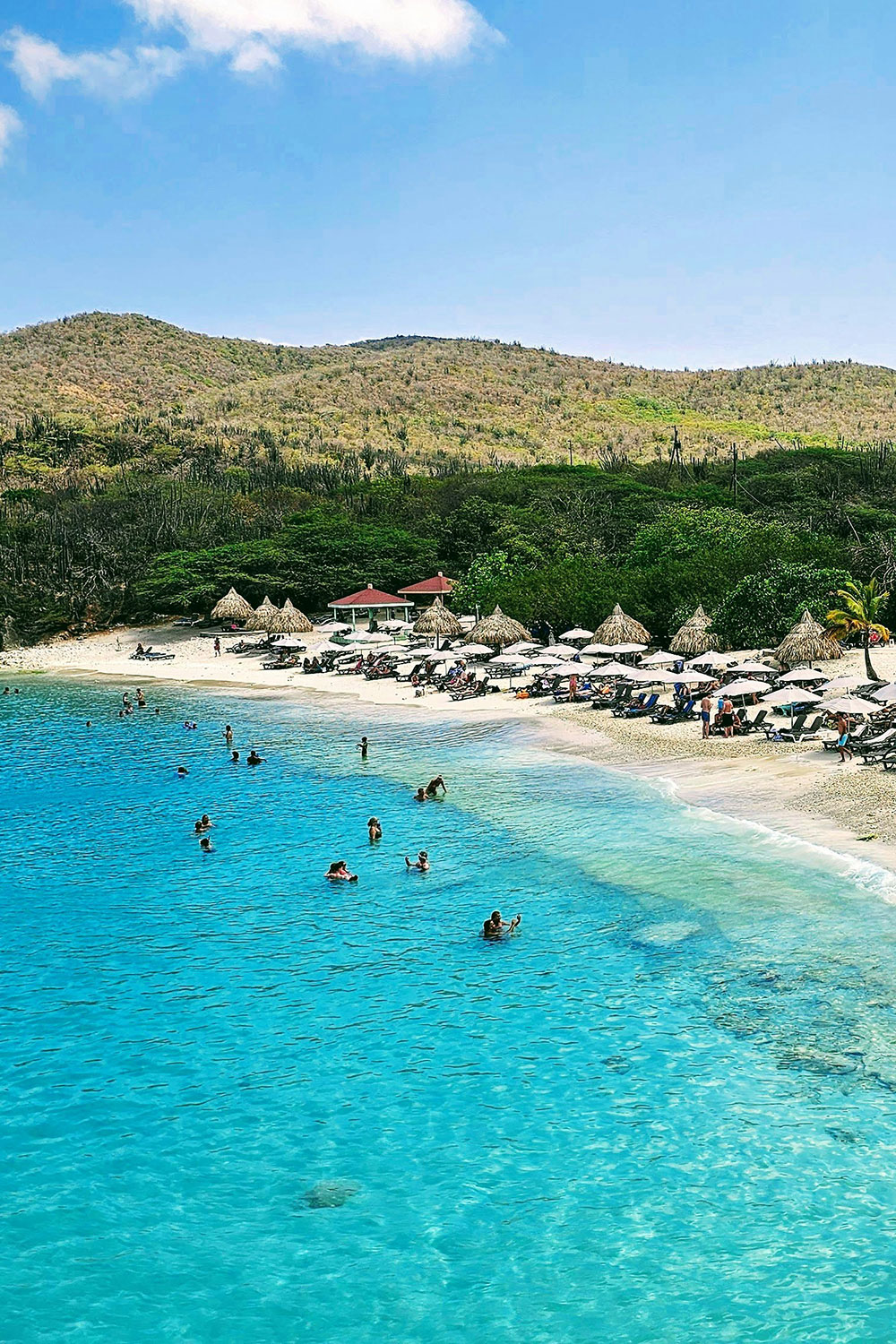
What I loved most was walking up to the viewpoint before heading down; the panoramic view alone is worth the stop.
If you’re into swimming and just floating in turquoise water, this is your place. Also, if you love snorkeling.
You’ll need a car (or join a guided island tour), as it’s located on the western side of Curaçao. The road is easy, and there’s a free parking area right above the beach.
Facilities are simple but enough for a comfortable visit. There’s usually a small snack bar for drinks and light bites, plus basic amenities like restrooms. Still, it’s not a full-service beach, so don’t expect luxury setups or beach clubs. It is best to bring snacks and water, especially if you plan to stay for a few hours
If you’d like to stay nearby, look into stays or apartments around Westpunt, the closest area to many of Curaçao’s best natural beaches. It’s quieter and more remote than the resort zones, but perfect if you want to wake up close to spots like Grote Knip. Rancho El Sobrino, for example, is a popular mid-range option,
Kleine Knip
If Grote Knip is the showstopper, then Kleine Knip is its little sister; same crystal-clear water, same beautiful bay views, but with one big advantage: it’s usually a little less crowded.
You arrive, take a few steps, and the beach simply reveals itself; calm, inviting, and effortlessly pretty. The colors are just as vivid, shifting from deep blue to bright turquoise, but the overall feel is more relaxed, more everyday, in the best possible way.
What I really loved was how easy it felt. No pressure, no “must-do” moments, just a simple beach where you can lay down your towel, slip into the water, and stay there longer than planned. The bay is smaller and more enclosed, which makes the sea calmer and perfect for a slow, peaceful swim.
The vibe here leans more local, which adds to its charm. You’ll see families, small groups, and people who clearly know this is one of those reliable, go-to beaches.
Facilities are minimal but convenient. There’s usually a small snack truck or local stand selling drinks and simple food, plus basic restrooms and free parking right next to the beach. You can also rent sunbeds and umbrellas.
Still, it’s a good idea to bring your own stuff, water and snacks, especially if you’re planning to stay a while.
If you want to stay nearby, look into villas and apartments around Lagun; this area has some beautiful, peaceful stays with sea views that feel completely removed from the busier parts of the island.
And if you prefer a bit more comfort or hotel-style amenities, there are also a few small hotels in Lagun, giving you the best of both worlds: quiet surroundings with easy access to multiple beaches.
Playa Lagun
Playa Lagun is one of those beaches that feels like it’s tucked away on purpose. It is also located on the island’s quieter northwest coast, right next to the small village of Lagun.
You’ll need a car to reach it, unless you are staying nearby, since Lagun is actually a fantastic base. You’ll find apartments and villas perched on the cliffs with incredible sea views, plus a few small, laid-back resorts (Lagoon Ocean Resort and Lagun Blou Resort) and boutique-style accommodations, as mentioned earlier.
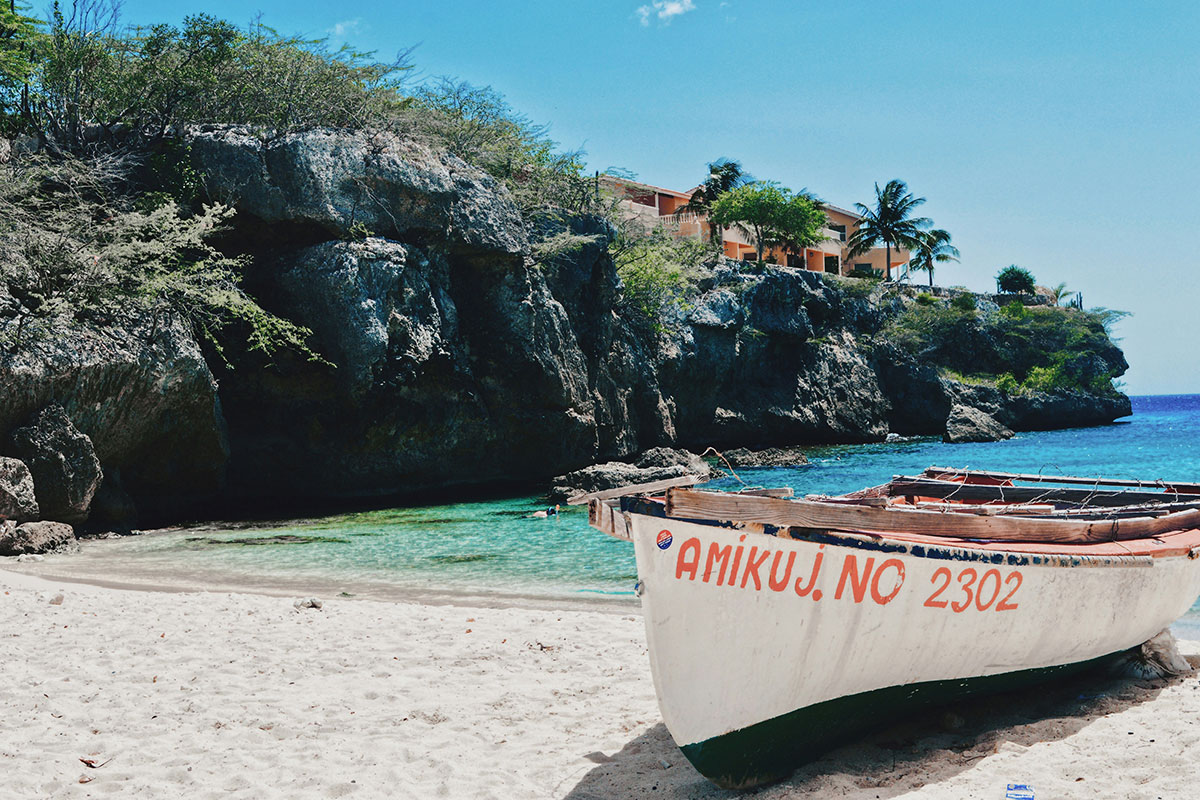
What makes Playa Lagun special is the setting. You don’t just walk onto the beach, you basically descend into it. A set of steps leads you down between cliffs that open into a narrow, sheltered bay. The whole place feels intimate, almost hidden, like a natural little pocket carved into the coastline.
The water here is usually calm and incredibly clear, which makes it one of the best spots on the island for snorkeling. You don’t need to swim far to start seeing corals and fish, and if you’re lucky, even a sea turtle might glide past. It’s the kind of place where you put on a mask “just for a quick look” and end up staying in the water much longer.
Despite its small size, Playa Lagun is surprisingly well set up. There’s a casual clifftop restaurant overlooking the bay, perfect for a relaxed lunch or a cold drink with a view. Sitting there after a swim, looking down at the water, was easily one of my favorite little moments.
Because of its size, the beach can fill up, especially around midday, so timing matters here.
Mambo Beach
Mambo Beach is where Curaçao turns up the volume a little. This is one of the island’s most accessible and lively beaches, and you feel that energy the moment you arrive. Unlike the wild coves on the west coast, Mambo is built around a long, sandy stretch of calm, protected water (thanks to breakwaters), making it easy to swim and perfect for a full, carefree beach day.
But what really defines Mambo Beach isn’t just the beach itself, it’s everything happening around it.
There’s a whole beachfront boulevard lined with restaurants, beach clubs, and bars, so you’re never more than a few steps away from your next drink, snack, or meal. You can start your day slow, then gradually slide into a more social, upbeat vibe without ever leaving your sunbed.
Some of the most popular spots right on the beach include Bonita Beach Club, Madero Ocean Club, and Riléks Beach Bar, all offering that classic mix of loungers, cocktails, and music.
If you’re in the mood for food, you’re spoiled for choice, from sushi at Origami Sushi to casual bites at Pizza Mare or grilled dishes at El Grill & Mexicano.
And if you feel like stepping it up a bit, places like Cabana Beach and Chill Beach Bar & Grill (connected to nearby resorts) add a slightly more polished beach club feel, often with live music or evening events.
The vibe here is social, fun, and a little bit “see and be seen”, especially later in the day when things start to pick up and sunset turns into drinks.
Facilities are excellent across the board. You’ll find sunbeds, umbrellas, showers, water sports, shops, and pretty much anything else you might need. It’s one of the easiest beaches on the island if you want a no-effort, everything-in-one-place kind of experience.
When it comes to where to stay, this is one of the best areas in Curaçao. You’ve got several well-known resorts right on or next to the beach, including LionsDive Beach Resort and Kontiki Beach Resort, both within walking distance of everything. There’s also The Beach House Curaçao if you prefer apartment-style accommodation with a bit more space
Cas Abao Beach
Cas Abao is one of those places designed for a full “lazy day,” and a must-visit spot on the island for those who want a comfortable beach experience. Arrive mid-morning, rent a sunbed, take a few swims, and don’t rush off; the light toward late afternoon here is especially beautiful.
Set on the southwestern coast of Curaçao, about a 30–40 minute drive from Willemstad, it’s far enough from the island’s center to feel like an escape, but still very accessible. The road winds down a bit, and then suddenly the bay opens up in front of you; wide, bright, and beautifully framed by low hills and palms.
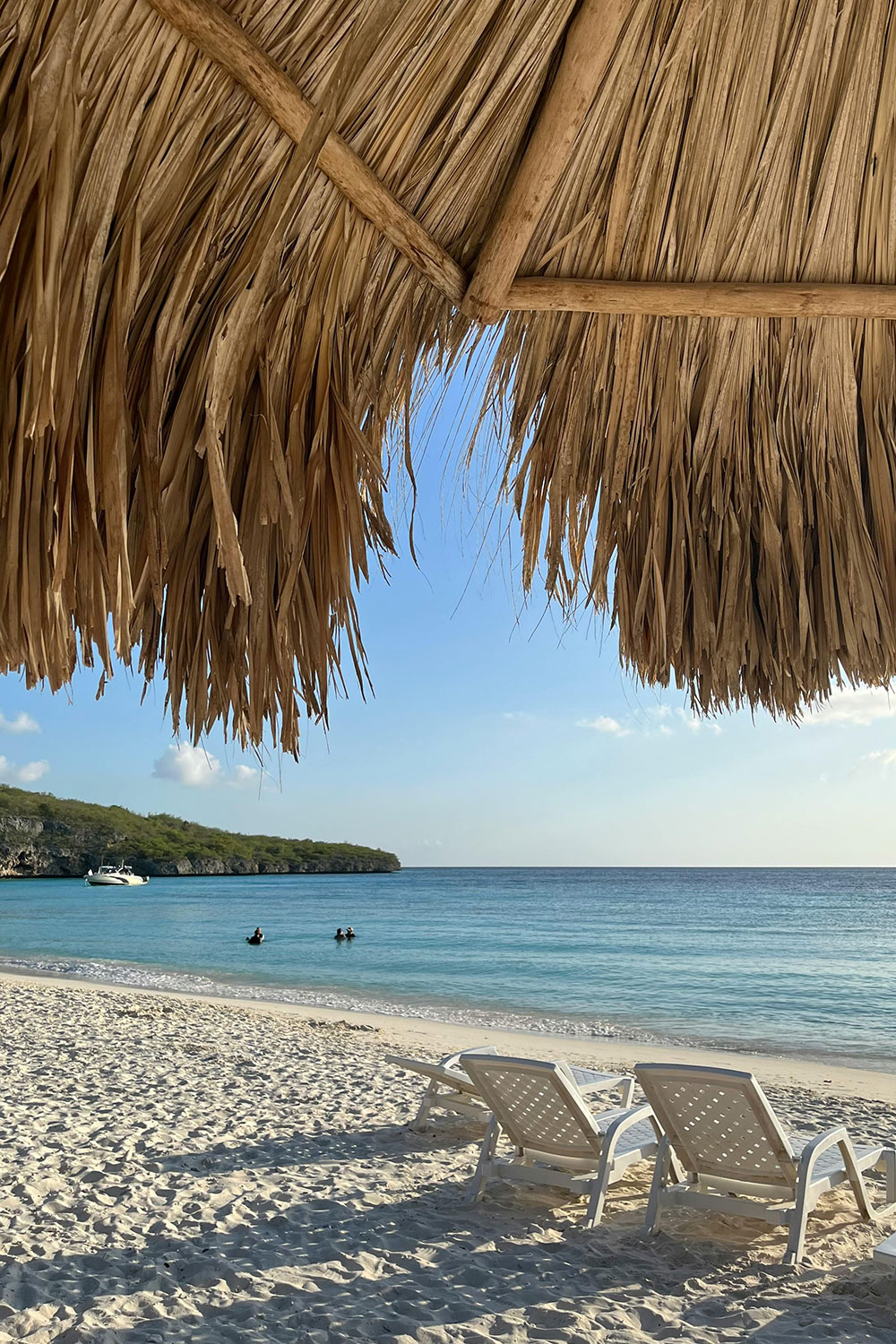
The first thing you notice is the sand. It’s soft, pale, and really comfortable to walk on. Then there’s the water; calm, clear, and shifting between shades of blue that almost look too perfect to be real.
What makes Cas Abao stand out is how well-balanced it is. It has that “postcard beach” look, but without feeling overdone. You can just as easily spend the day doing absolutely nothing as you can filling it with swims, snorkeling, and snack breaks in between.
Snorkeling here is surprisingly good, especially along the edges of the bay where you’ll find rocks and coral with plenty of fish. It’s not overwhelming, but it’s enough to keep things interesting even if you’re just casually exploring.
Unlike many of Curaçao’s more rugged beaches, Cas Abao is very well equipped. There’s an on-site beach club with sunbeds, umbrellas, a bar, and a restaurant serving everything from quick bites to proper meals.
You’ll also find showers, restrooms, and even a small shop, so it’s one of the easiest beaches on the island to settle into for a full, comfortable day. Because of that, there’s a small entrance fee, about about $6 per car.
If you want to stay nearby, you’ll find a mix of villas and vacation rentals in the surrounding area, many with sea views and a peaceful, tucked-away feel.
Jan Thiel Beach
Jan Thiel is the kind of beach where everything is exactly where you want it to be.
Located just 15–20 minutes from Willemstad, it’s one of the most accessible beaches on the island, and you feel that the moment you arrive. No winding remote roads or hidden entrances here. Just an easy drive, clear signage, and a well-organized beachfront waiting for you.
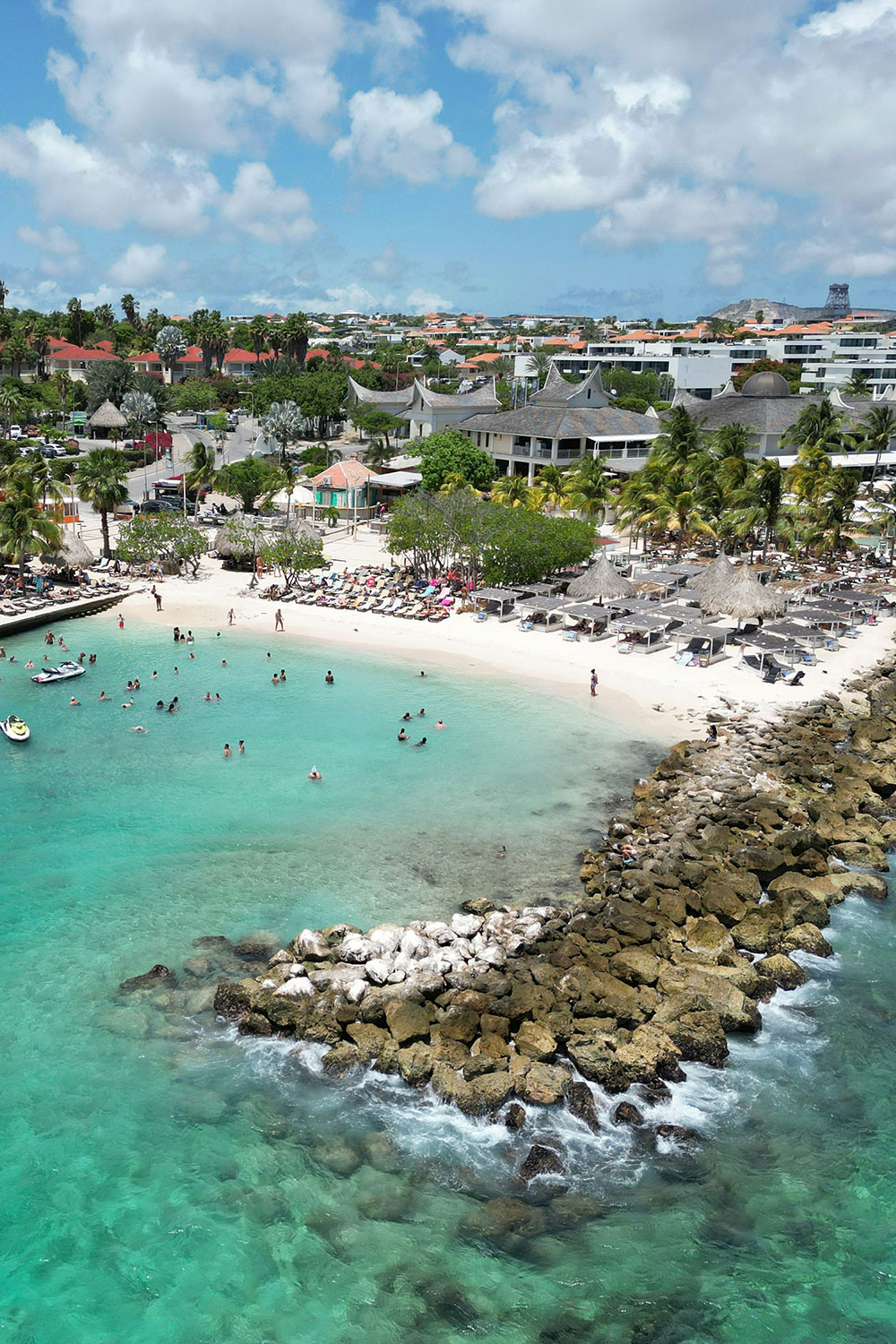
The setting is a wide, sheltered bay with calm, swimmable water and a mix of sand and pebbles underfoot. It might not have that dramatic “hidden cove” feel like some of Curaçao’s west coast beaches, but what it offers instead is comfort, convenience, and a lively atmosphere that’s hard to beat.
What stood out to me here is how seamlessly everything blends together. You can start your day with a swim, move to a sunbed with a coffee or smoothie, grab lunch without leaving the beach, and somehow transition straight into sunset drinks without ever feeling like you need to relocate.
There’s a steady, upbeat energy; people walking along the shore, music playing softly from beach clubs, water sports happening in the background, but it never feels overwhelming. More like a place that gently keeps you entertained.
Facilities are excellent. You’ll find several beach clubs and restaurants right on the sand, like the Zanzibar Restaurant, the Koko’s or Tinto Bar Y, offering everything from casual bites to more refined dining, plus sunbeds, umbrellas, showers, and water sports rentals. There’s also a small shopping area just behind the beach, which adds to the “everything within reach” feeling.
If you want to stay nearby, Jan Thiel is one of the best areas on the island. There are plenty of modern apartments, villas, and some of the island’s most upscale resorts (Papagayo Beach Resort, Livingstone Jan Thiel Resort, Chogogo Dive & Beach Resort Curacao) within walking distance, making it an ideal base, especially if you prefer easy access to restaurants, nightlife, and the beach without needing to explore too far.
Playa Porto Marie
Located on the southwest coast, Playa Porto Marie is easy to reach by car and well signposted along the way. The road dips down toward the coast, and as you arrive, you get that first glimpse of the bay: wide, open, and framed by rolling hills rather than steep cliffs, which already gives it a slightly different feel from many other Curaçao beaches.
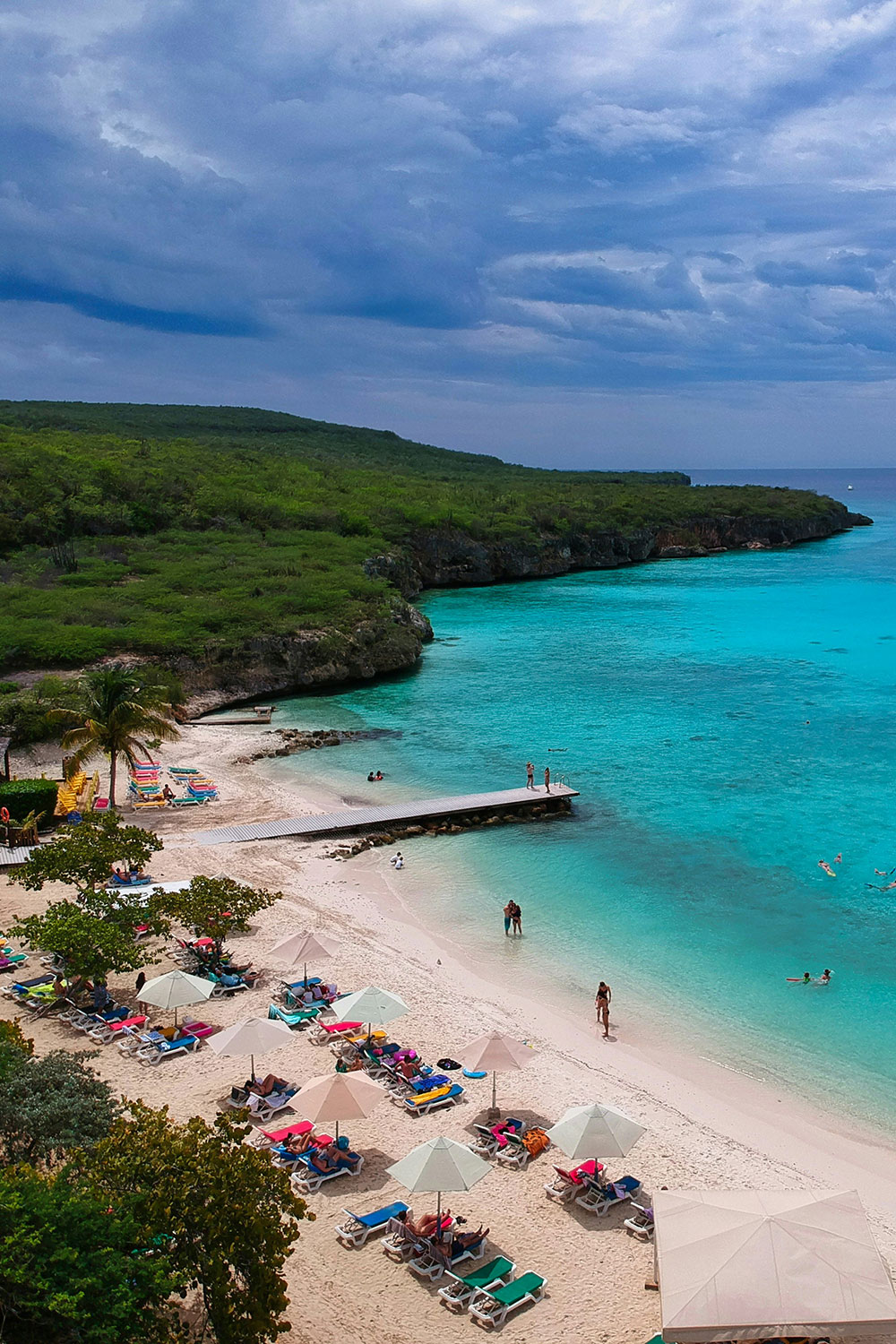
What makes Porto Marie stand out is its layout. The beach is spacious, with plenty of room to spread out, and the shoreline curves gently, creating a calm, inviting swimming area. It feels organized but not crowded, lively but never overwhelming. It is the kind of place where everyone seems to find their own little rhythm.
The water is clear and typically very calm, perfect for swimming, but the real highlight here is what’s beneath the surface. Porto Mari is known for its unique double reef system, which means you can snorkel out in two different directions and get completely different underwater views. Even if you’re not an experienced snorkeler, it’s an easy and rewarding spot to explore.
Then there’s the atmosphere; it has a slightly social, easygoing vibe without tipping into “beach club party.” People are chatting, snorkeling, relaxing, coming and going; it just feels alive in a very natural way.
Facilities here are excellent, which makes it a strong contender for a full beach day. There’s an on-site beach bar and restaurant serving drinks, snacks, and proper meals, plus sunbeds, umbrellas, showers, and restrooms. You’ll also find a dive shop if you want to take things a step further.
And yes, there’s a slightly unexpected detail that makes this beach even more memorable: you might spot a few pigs wandering around near the entrance area. Very Curaçao, very random, and somehow it fits. A short hike leads to the nearby beach – worth checking out; it’s pretty, too!
Entrance fee: ~ 3$ per person
DaaiBooi Beach
Tucked along the road between Willemstad and the western beaches, this small bay feels local, unpretentious, and refreshingly real. DaaiBooi is not dramatic like Grote Knip or as polished as Cas Abao, but it has a laid-back charm that’s easy to settle into.
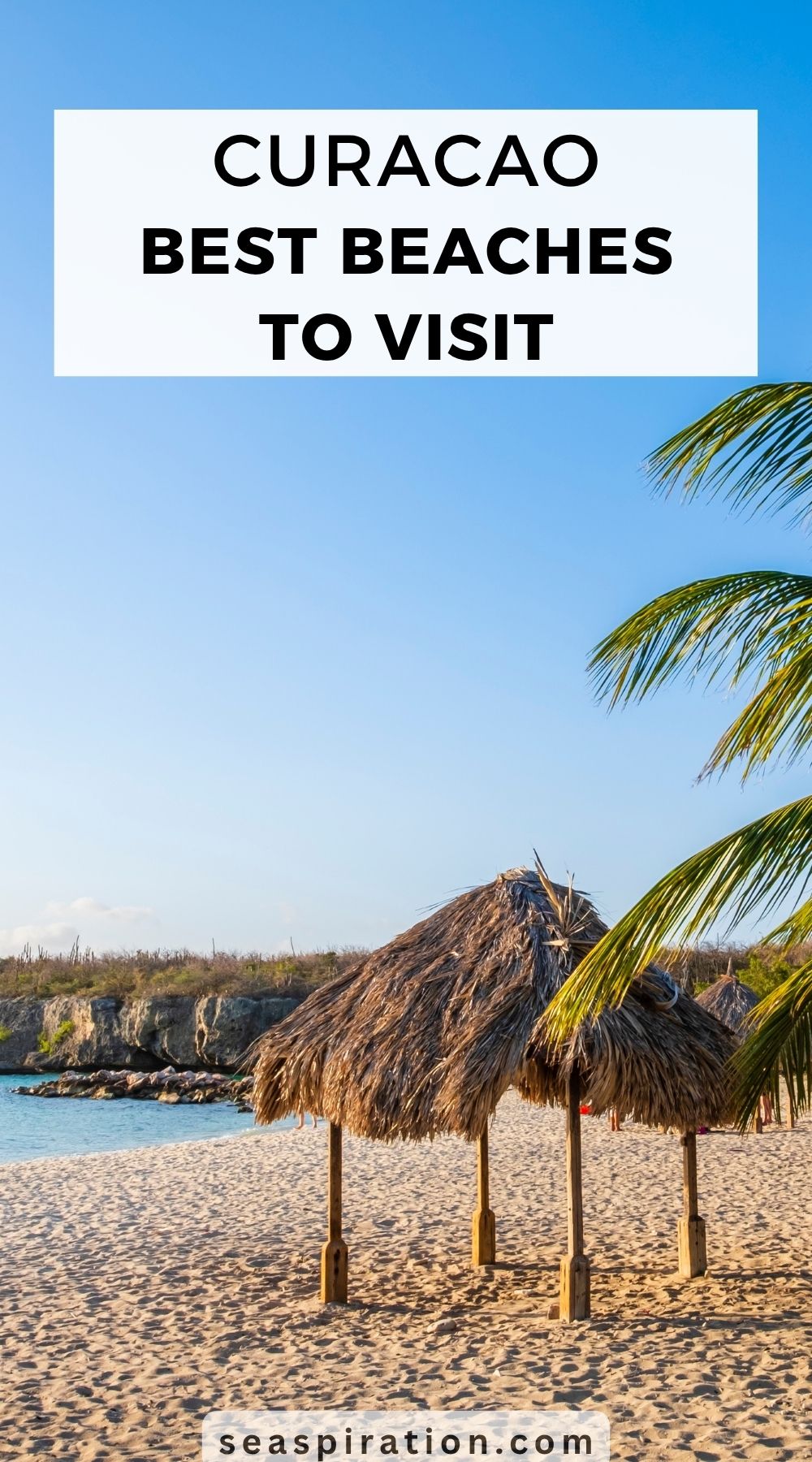
The beach itself is a mix of sand and pebbles, with calm, clear water that’s great for an easy swim. It’s also a nice little snorkeling spot, especially along the rocky edges where you’ll find fish darting between the corals. Nothing too intense, just enough to keep things interesting.
What stood out to me here was the atmosphere. It felt like a “pause” kind of beach, the place you stop at for a swim, end up staying longer, and don’t quite know why. There’s usually a mix of locals and a few travelers, but it never felt crowded or busy.
Facilities are simple but very welcome. There’s a casual beach bar and snack spot right by the sand where you can grab a cold drink or something quick to eat, plus basic amenities like showers and restrooms. You can also park right next to the beach, which makes it an easy, no-effort stop if you’re driving along the coast.
Getting here is straightforward. It’s about a 20–25 minute drive from Willemstad, and it’s often included as a quick stop on the way to places like Porto Mari or Cas Abao.
If you’d like to stay nearby, this area offers a nice balance between convenience and quiet. You’ll find villas and vacation rentals scattered along the coast. Staying here gives you easy access to multiple beaches without being too far from the city.
Playa Forti
Playa Forti is not your typical “lie down and relax all day” kind of beach, and that’s exactly what makes it memorable.
Located on the rugged northwest coast, right next to the village of Westpunt, this spot feels a bit wilder and more dramatic than most. Instead of soft sand and wide open space, you’ll find a small, rocky cove framed by cliffs, with deep, dark-blue water that almost instantly tells you: this is a different kind of swimming experience.
The first thing you’ll probably notice isn’t even the beach but the cliffs above it.
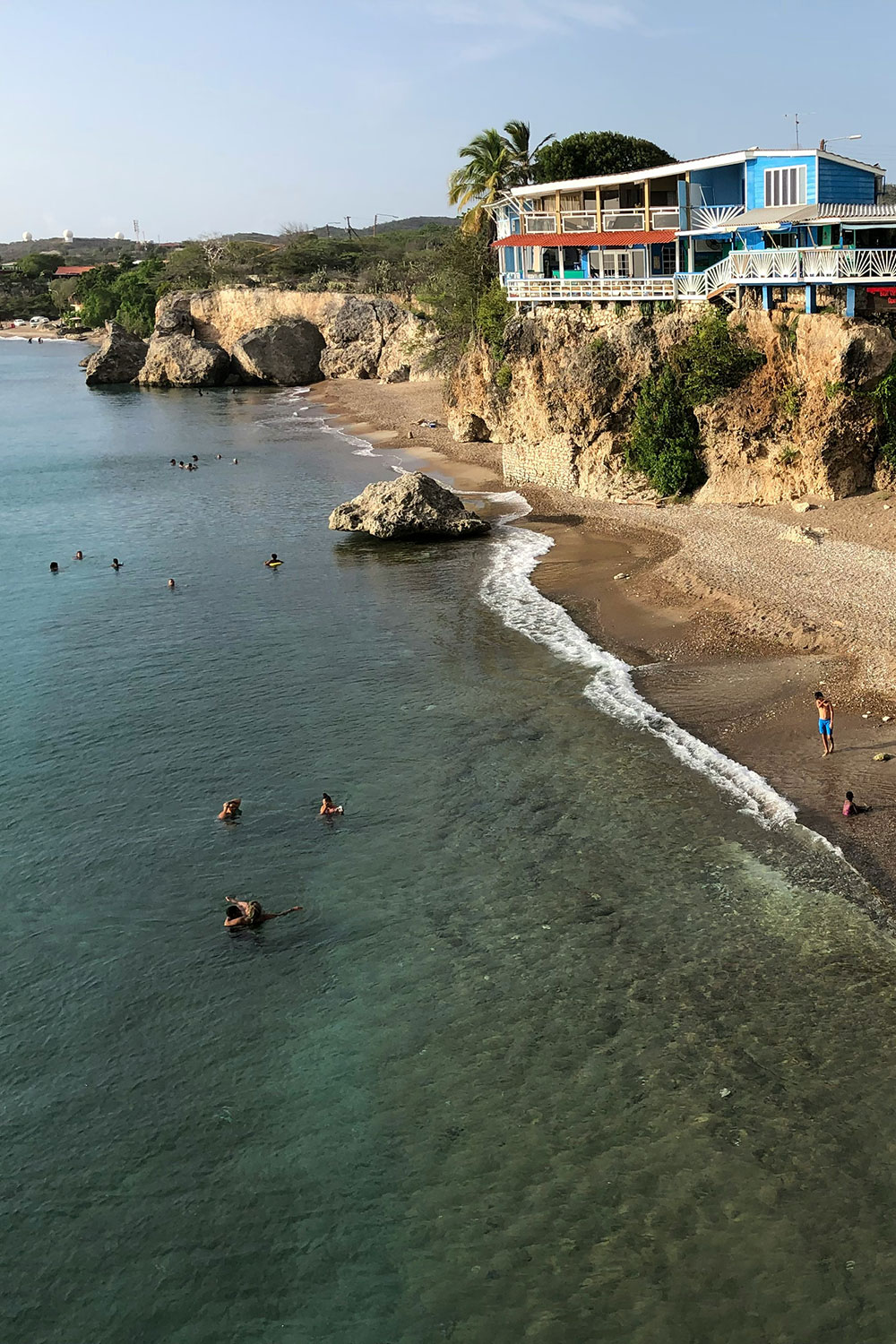
Because Playa Forti is famous for one thing: cliff jumping. If you’re feeling brave, you can climb up to the top (near the restaurant) and jump straight into the sea below. It’s a popular local activity and even if you’re not planning to jump yourself, watching others take the leap is half the fun.
The water is deep and clear, which makes it one of the safer spots on the island for this kind of activity, but still, it’s definitely not for everyone.
The beach itself is small and more rugged, with a mix of sand and rock, so it’s not the most comfortable for sunbathing. But for a quick stop, a swim, or something a bit different, it’s absolutely worth it.
One of the highlights here is the restaurant perched right above the cove: Restaurant Playa Forti. The views from up there are incredible, looking straight out over the cliffs and sea. It’s a great place to sit down for lunch or a drink after a swim. Simple food, but a setting that’s hard to beat.
Getting here is easy if you’re already exploring the west side of the island. It’s just a short drive from beaches like Grote Knip and Playa Lagun, with parking available right by the restaurant.
If you’re planning to stay nearby, Westpunt again is your best option with relaxed, small-scale accommodations, apartment-style stays and villas around the area. For something very close, there are also a few guesthouses and rentals within walking distance of Playa Forti itself, giving you that “wake up near the sea” experience.
Klein Curaçao Beach
Klein Curaçao isn’t just another beach on your list; it’s a full-day experience that feels completely different from anywhere else on the island.
This tiny, uninhabited island sits about 25 km off the southeast coast of Curaçao, and getting there is part of the adventure. There are no hotels, no shops, no permanent residents, just a long stretch of powdery white sand, a historic lighthouse, and water so clear it almost looks unreal.
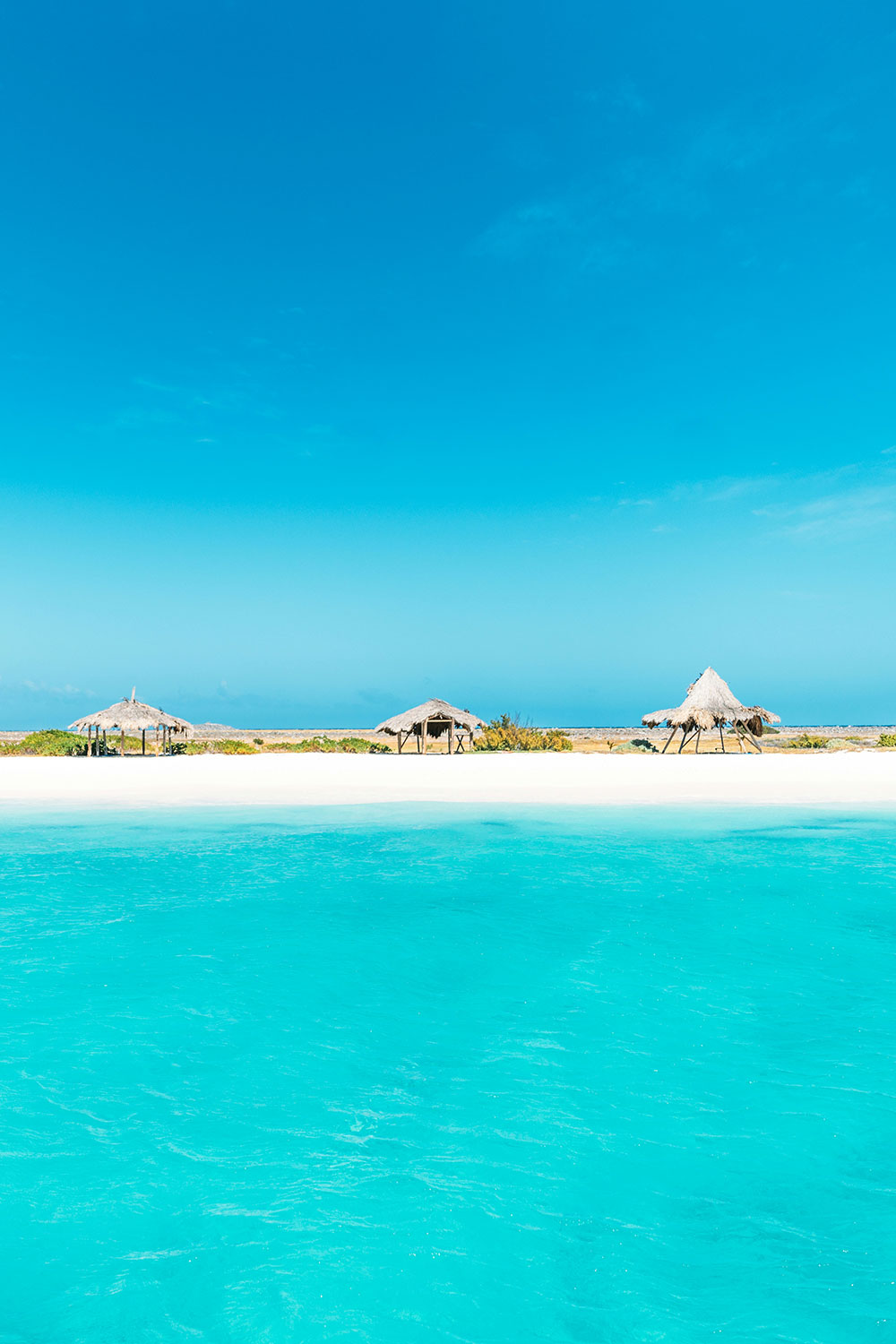
To visit, you’ll need to book a boat trip. Most tours depart early in the morning (usually around 7–8 am) from places like Jan Thiel or Spaanse Water, and the journey takes about 1.5 to 2 hours, depending on the boat and sea conditions. You’ll find several options from large catamarans with breakfast, lunch, and open bar included, to smaller, more intimate boats for a quieter experience.
Once you arrive, the pace shifts completely. There’s nothing structured about your time here, and that’s exactly the beauty of it. You can walk along the seemingly endless beach, swim in the calm, crystal-clear water, or snorkel right off the shore. Klein Curaçao is also one of the best places around to spot sea turtles, often without needing to go far.
If you feel like exploring, you can wander over to the old pink lighthouse or the shipwreck on the island, both slightly surreal against the otherwise untouched landscape.
Most organized tours set up shaded areas (palapas or tents) and include food and drinks, which is important because there are no real facilities on the island. A few basic shelters exist, but you should think of this as a remote destination rather than a serviced beach.
You’ll typically head back to the main island in the late afternoon, often timing the return with sunset views over the water, which makes the whole experience feel even more memorable.
Insider tip: Choose your tour carefully. Larger boats tend to be more social and lively, while smaller tours offer a quieter, more relaxed experience. And if you can, pick a day with calm seas; the journey is part of the adventure, but it’s definitely smoother when the water cooperates