
Curaçao Packing Guide: Here Is Exactly What To Bring
So, you’re heading to Curaçao, the bold, brilliant, wonderfully unpredictable “C” of the ABC Islands. First things first: congratulations on choosing what might just be the most visually stunning destination in the entire Caribbean. This island is a bit of a different beast from its sunbaked neighbors, Aruba and Bonaire, and your suitcase should reflect that, so this Curaçao Packing Guide will come in handy for you.
Here’s the thing: Curaçao isn’t just a beach destination. Yes, its shoreline is jaw-dropping but this island rewards explorers. From wandering cobblestone streets through the historic capital, hiking Mt. Christoffel or sipping a Blue Curaçao cocktail in a beach bar, the range of experiences means packing for Curaçao takes a little more thought than your average “just grab some bikinis and go” Caribbean trip.
But don’t worry, you absolutely should not overpack. In this guide, I will walk you through exactly what you need, and just as importantly, what to leave at home, so your bag is prepared for every version of Curaçao without weighing you down.
What Makes Packing for Curaçao Different from Other Caribbean Islands?
Before diving into the list, here are some island features that help to understand what makes packing for Curaçao unique:
- The terrain is more diverse: Curaçao has hills, caves, national parks, rocky northern beaches, and a city center with cobblestone streets. Your footwear needs to work harder here.
- The humidity is real: Curaçao sits closer to the equator and tends to be more humid, average highs hover around 88–89°F (31–32°C) with humidity that can hit 75–80%, especially from July through November. Trade winds help, but fabric choice matters more here than on breezier islands.
- The marine life is among the best in the Caribbean: Curaçao has over 70 world-class dive sites, of which 38 are accessible directly from shore, no boat needed. If you’re any kind of water enthusiast, underwater gear is a must.
- It’s culturally rich in ways that require modest dressing: Willemstad’s UNESCO-listed historic districts, museums, and religious sites (including the Mikvé Israel-Emanuel Synagogue, the oldest synagogue still in use in the Americas) mean you’ll want at least one respectful outfit beyond your beach coverup.
Now, with all of that context in mind, let’s pack.
What To Pack For Curaçao: Complete List Of Clothes And Travel Essentials
Now for the part you’ve been waiting for, the actual packing list. The goal here is that sweet spot: everything you’ll genuinely use, organized by category so you can pack (and repack) with confidence.
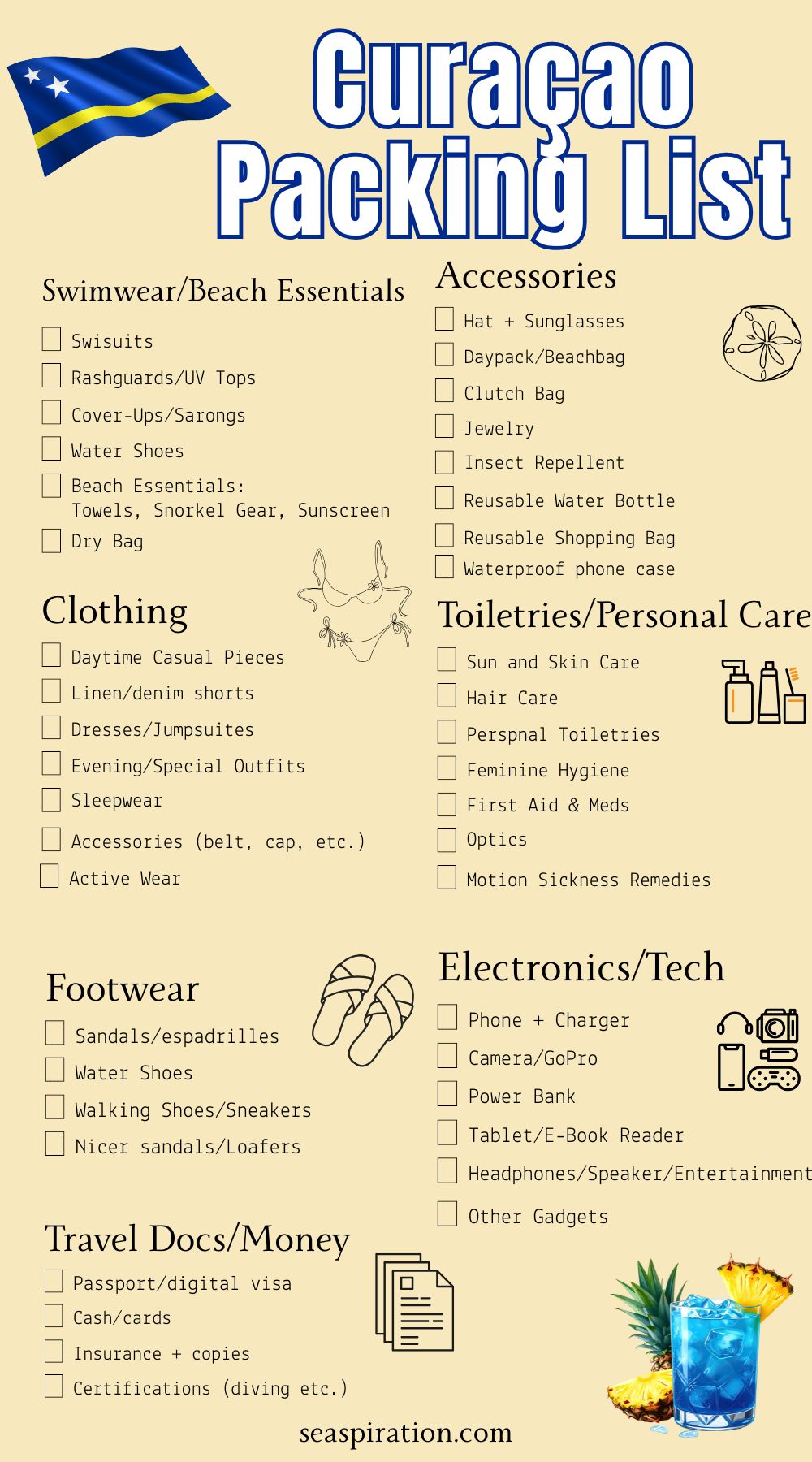
Swimwear and Beach Essentials: Your Water Arsenal
A Caribbean vacation means non-stop beach time, and in Curaçao, it is not just the beaches, but also the first-class marine life. So yes, your swimwear situation deserves real thought.
Swimsuits (3–4 minimum): Pack at least three swimsuits so you always have a dry option on hand. The humidity means things take longer to dry here. For women, one-pieces and rash-guard sets are especially practical for longer snorkel or dive sessions. For men, quick-dry board shorts double nicely as casual evening shorts — a handy packing hack.
Rashguards and UV tops: Don’t even think about skipping these. Curaçao is close to the equator and the sun is intense, even on overcast days. A long-sleeved rashguard protects your back during snorkeling sessions and saves you from the painful irony of spending your vacation hiding from a sunburn. These are essential, not optional.
Cover-ups and sarongs (2–3): Once you step off the sand, a cover-up is expected; restaurants and shops will see you in something other than a bikini. A lightweight kaftan, a linen button-down, or a stylish sarong tossed over your suit makes the beach-to-brunch transition seamless.
Your own snorkel gear: This cannot be stressed enough: bring it. Curaçao’s shore-accessible reefs mean you can slip into the water independently at dozens of beaches without booking or renting a thing. A well-fitting personal mask and snorkel pays for itself on day one. Compact travel fins are worth the space in your luggage if you’re a frequent snorkeler.
Water shoes with a strap or Teva-style grip: Many of Curaçao’s most beautiful beaches have rocky coral shallows at the entry point, where wearing flip-flops is simply not ideal. You need something that stays on your foot and grips – water shoes will do the job. This is the single most commonly forgotten item by first-time visitors to Curaçao.
A dry bag or waterproof pouch: Essential for boat excursions, shore dives, and beach days where you leave your belongings on the sand. A 20L roll-top dry bag is ideal; it protects your phone, wallet, and keys while doubling as a shopping bag around town.
Reef-safe sunscreen (SPF 50+): Curaçao’s reefs are both gorgeous and fragile. Chemical sunscreens with oxybenzone and octinoxate are harmful to reef ecosystems, so bring a mineral-based, reef-safe formula and apply generously. If you forget or run out, you can find reef-friendly options on the island, but your preferred brand is safest to pack from home.
Beach towels: Many of Curaçao’s beaches are natural, public beaches without facilities. Lounge chair and accessory rental can be scarce, so bringing some compact, quick-dry towels is essential so you can spread out anywhere.
Clothing: Dressed for Wherever the Day Takes You
A Curaçao itinerary rewards spontaneity. Your outfit might need to take you from a morning hike to an afternoon museum visit to a rooftop dinner, all in the same day. The good news is the island’s vibe is effortlessly casual, but the variety of available activities means you’ll want a few more versatile pieces than you might pack for a pure beach destination. Still, choosing the right outfits is easy; let me give you some ideas on what clothing to bring:
Daytime Casual Outfits
For women: Flowy midi dresses are a practical favorite: long enough that a gust of Caribbean wind won’t become a travel story you didn’t ask for, and cool enough for humid afternoons. A mix of casual sundresses, a pair of linen shorts, and breezy tank tops will carry you through most days beautifully. Denim shorts are wearable, but go for a lighter wash. If you’re planning any hiking or outdoor activities, pack a set or two of lightweight activewear.
For men: Lightweight linen or cotton shorts, breathable polo or open-weave shirts, and a couple of quick-dry athletic shirts for active days. Zip-off convertible pants are genuinely smart here. You can wear them full-length on cooler evenings or when you visit restaurants that request pants (more on that below), then unzip to shorts for daytime exploring.
Bring at least one modest outfit. If you plan to visit the historic synagogue, museums or any church, covered shoulders and knees are appropriate. A lightweight maxi dress or loose linen trousers serve this purpose without adding bulk.
The fabric rule: Linen, cotton, chambray, and moisture-wicking blends only. Polyester and tight synthetics in Curaçao’s humidity are a firm no. Loose and light is the mandate.
Evening and Night Out Attire
Curaçao’s dining and nightlife scene is better than most visitors expect. Willemstad has genuinely excellent restaurants and the neighborhoods of Pietermaai and Otrobanda have a cool, artsy energy in the evenings that rewards a bit of effort in dressing.
A few chic pieces: One or two slightly dressier outfits are worth bringing. For women, a simple maxi dress that can be accessorized or dressed down depending on the evening is the workhorse piece of your Curaçao wardrobe. For men, some nicer restaurants do prefer long trousers; a lightweight pair of linen pants and a collared shirt will see you through any dinner on the island, from a casual beach bar to the most upscale table in Willemstad.
A light wrap or cardigan: Air conditioning in Curaçao can be aggressive: restaurants, taxis, and shops are often blasting it. A lightweight wrap or thin cotton cardigan that fits in your beach bag is worth its minimal weight for this reason alone.
Footwear: What You Will Actually Need
Curaçao’s diversity of terrain and activities genuinely calls for different types of footwear and travelers who try to get by with less often regret it. So, here is what I recommend bringing:
Sandals (everyday): A sturdy, supportive pair of leather sandals or slide-on espadrilles for walking, strolling and dinner out. Willemstad’s streets are cobblestone in places and uneven in others; flimsy sandals will have your feet crying by midday.
Water shoes with grip and straps: As mentioned above, non-negotiable for Curaçao’s beaches and boat excursions. Teva-style sandals or neoprene water shoes that stay on your feet are the right call.
Walking shoes or light sneakers: Curaçao’s must-see spots include national parks or caves (which can be slippery inside), where you will need closed-toe shoes with real traction.
One pair of nicer sandals or loafers: For evenings out, rooftop bars, casino visits, or nicer restaurants, a clean pair of leather sandals or loafers covers you perfectly. Heels are impractical on cobblestone and unnecessary given the island’s casual standards.
Accessories and Practical Extras
These are the small things that quietly make or break a trip. Easy to overlook when packing, impossible to forget once you’re squinting into the Caribbean sun without sunglasses or swatting mosquitoes on a sunset terrace. Here’s what’s worth throwing in:
Hat and UV sunglasses: A wide-brim hat is your skin’s best friend on a destination where midday UV exposure between 10am–3pm is particularly intense. Polarized UV-blocking sunglasses are worth investing in for both eye protection and reducing glare off the water.
A daypack that does double duty: A small, water-resistant backpack or proper dry bag is ideal for day trips. Use it as your beach bag, your excursion bag, and your carry-on. One bag for all these roles keeps things simple.
A small wicker or clutch bag for evenings: Particularly useful if you’re spending evenings out. Something lightweight that holds your phone, cards, and a lip balm — nothing elaborate.
Insect repellent: Mosquitoes are present in Curaçao, particularly in the evenings, near mangroves, and in greener parts of the island. A DEET-based spray or mosquito wristbands for evenings out are strongly recommended.
Reusable insulated water bottle: Hydration matters more in Curaçao’s humidity than on breezier islands. An insulated bottle keeps water cold throughout a beach day or hike. Good news: tap water in Curaçao is safe and drinkable, so you can refill without buying plastic bottles all day.
Reusable shopping bags: Curaçao charges for plastic bags at grocery stores and many shops, so pack a couple of lightweight reusable totes and you’ll thank yourself when stocking up at the local market or picking up souvenirs.
Portable phone charger: Long beach days, hikes, and evenings out will drain your battery faster than you expect. A solid power bank means you’re never stuck without navigation or a camera at a critical moment.
Toiletries, Personal Care: Humidity-Proof Your Routine
Think of this section as your comfort zone in a bag, the things that keep you feeling fresh, sun-protected, and ready for another full day on the island. Curaçao’s heat and humidity are wonderful until they’re not, so a little preparation here goes a long way.
Reef-safe SPF 50+ sunscreen: Already mentioned, but worth repeating. Familiar reef-safe brands can be found on the island, but selection is limited and prices are higher.
After-sun care: Aloe vera gel or a soothing after-sun lotion for those inevitable overexposure moments. Local pharmacies carry good options in case you forget or need more.
Humidity-proof hair care: Curaçao is humid and your hair will behave accordingly. If you’re prone to frizz, bring a leave-in conditioner, a UV-protective hair mist for time in the water and sun, and a lightweight hair oil or serum for post-beach frizz management. Skip heavy styling products; they don’t work here.
Personal toiletries: Pharmacies exist along the island and carry international brands, but the selection may differ from home. Pack your preferred items and assume you won’t find your exact brand. Travel-sized bottles are smart for carry-on travel.
First aid kit: Band-aids, antiseptic wipes, pain relievers, anti-nausea medication (especially if you’re doing boat dives or excursions to Klein Curaçao, which involves a longer ocean crossing), and any prescription medications in their original containers.
Motion sickness remedies: The boat trips can be rough. If you’re susceptible, come prepared.
Electronics and Tech: What’s Worth Bringing
While Curaçao is the kind of place that makes you want to put your phone down and just soak it all in, a few well-chosen gadgets will make your trip smoother and your memories better documented. Keep it lean; here’s what actually earns its place in your bag.
Universal power adapter: The island uses both 127V and 220V electricity and European-style sockets. American plugs don’t fit without an adapter. Pack a universal adapter.
Phone and charger: Essential. Consider purchasing a short-term local SIM or eSIM for data if you plan to explore the island independently; reliable cell coverage makes navigation much easier.
Waterproof camera or GoPro: Curaçao’s underwater world is genuinely worth documenting. Whether you’re snorkeling or diving, capturing your moments with a waterproof camera elevates the whole experience. If you have an underwater housing for your camera, bring it. Or just get a GoPro.
Extra memory cards and batteries: You will take more photos in Curaçao than you expect. Willemstad alone will exhaust your storage before you even get to the beaches.
Waterproof phone pouch: For beach days when you want your phone accessible without risking sand or water damage.
E-reader: For long beach days at quieter west coast beaches, where you might not have a restaurant nearby. Far more practical than physical books for travel.
Travel Documents and Practical Paperwork
Before you zip up that suitcase, make sure your paperwork is as organized as your packing cubes. Curaçao has a couple of entry requirements that catch first-time visitors off guard, so it’s worth going through this checklist carefully before you leave home.
Digital Immigration Card: This is one of the most important things to know when traveling to Curaçao: all visitors are required to complete a Digital Immigration Card online within seven days of arrival. It’s free, but you must fill it out in advance and download it to your device before landing. Don’t overlook this; it’s the entry requirement.
Valid passport: Required for entry: Ensure it’s valid for at least six months beyond your travel date. US, EU, and many other nationals don’t require a tourist visa for stays under 90 days. Check requirements specific to your nationality.
Driver’s license: Curaçao is best explored by rental car. The public bus system is infrequent outside Willemstad, taxis are expensive, and there are no rideshare services. A car is how you get to the best beaches and hidden gems at your own pace.
PADI or dive certification card: If you’re a certified diver, bring your logbook and certification card. Dive shops will ask for both before letting you rent equipment or join advanced dives.
Payment cards + small cash: The official currency is the Netherlands Antillean guilder (ANG), but US dollars are widely accepted. Credit cards are accepted in most restaurants and shops in Willemstad. Carry some smaller bills in guilders or USD for beach vendors, tips, and market purchases; very large bills can be refused.
Travel insurance documentation: Not optional. Never travel without good insurance, especially if you’re diving, hiking, or doing any water sports.
Extra Packing Tip: What Colors & Styles Suit Best on The Island?
Here is where Curaçao packing gets genuinely fun. Unlike other Caribbean islands, where ocean blues and sandy neutrals are your photo backdrop, Curaçao has a colorful side too: the capital’s waterfront with its blazing rows of pink, yellow, orange, and turquoise Dutch colonial facades gives you a completely different canvas to dress against, so you can go a bit wild with the colors and styles you wear.
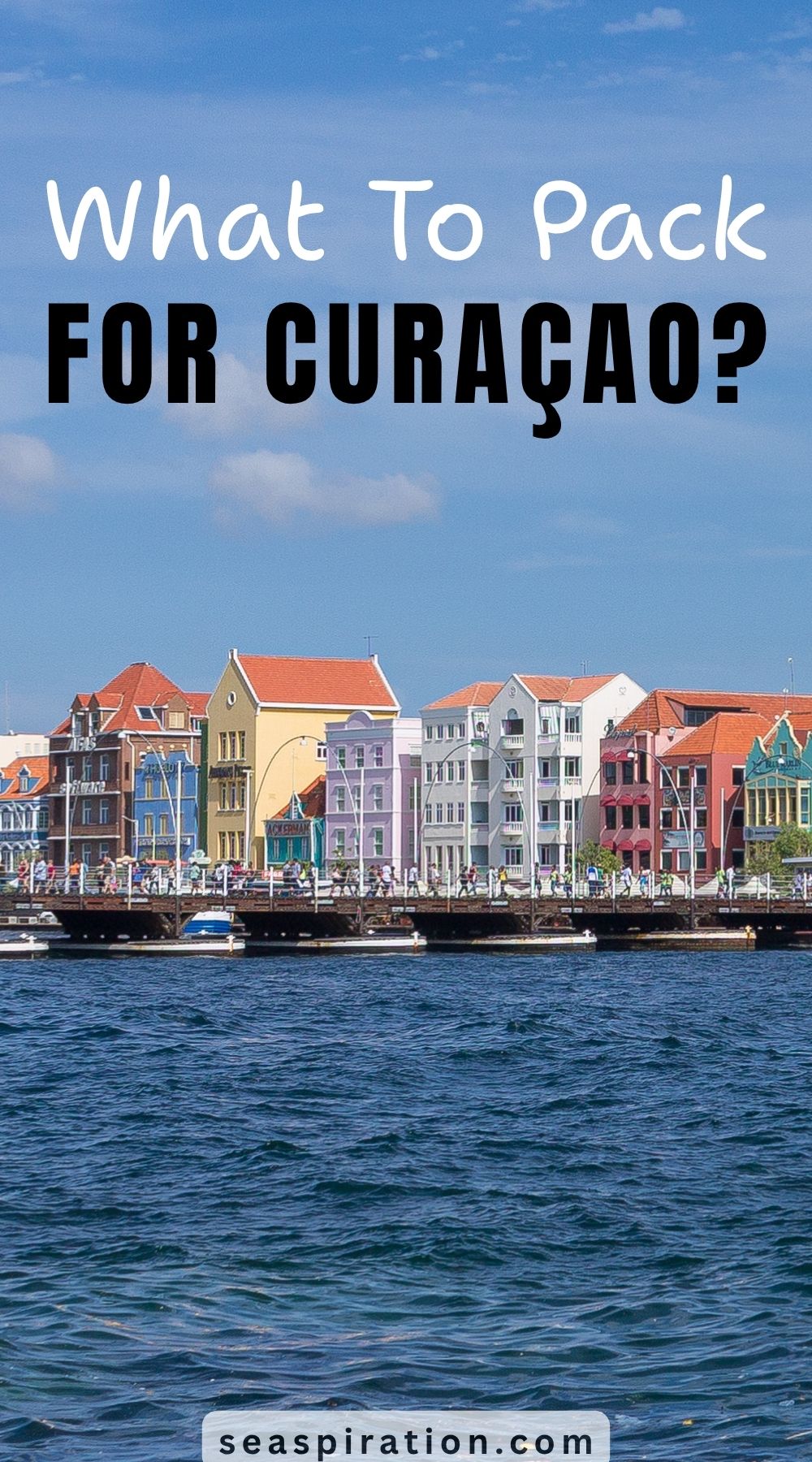
Go bold and colorful. The island practically demands it. Vivid coral, electric turquoise, sunflower yellow, hot pink; these all photograph magnificently against Willemstad’s painted buildings. This is the one Caribbean destination where you should resist packing only neutrals and whites.
That said, a few neutrals and whites earn their keep. A crisp white linen shirt or white dress looks extraordinary against the blue harbor water and the colorful facades. White also reflects heat in Curaçao’s intense sun; a practical win.
Colorful prints fit right in. Tropical floral prints, graphic African-inspired patterns, and bold color-block sets feel right at home on Curaçao’s streets in a way that feels authentic rather than touristy. The island’s culture, a rich blend of Dutch, African, and Caribbean, has a genuine love of color and pattern.
Leave the all-black wardrobe at home. Dark colors absorb the heat, look out of place in such a lively environment and photograph poorly against the island’s scenery. Reserve your black for the flight when it actually comes practical.
The Weather Factor: Packing by Season
Curaçao is warm year-round, but the humidity and rainfall vary enough to affect what you pack. Here is a little help on how to prepare, depending on when you visit.
December to April (Peak/Dry Season)
The most popular time to visit for a reason: lower humidity, consistent sunshine, and calmer seas. Packing is straightforward: full tropical summer kit, light fabrics, sunscreen. Note that January and February bring Carnival, one of the most vibrant celebrations in the Caribbean, lasting over a month. If you’re visiting then, pack something colorful and festive.
May to September
Humidity climbs, particularly in August and September (expect 75–80%). Pack extra moisture-wicking fabrics and more of your hair care products. Beaches are quieter, resort prices are lower, and the water is beautiful. A compact rain poncho is worth tossing in your bag for afternoon showers, though they tend to pass quickly.
October to November
The wetter shoulder season, with more frequent short tropical showers. A lightweight waterproof jacket or packable poncho earns its spot in your bag. Despite the rain, the island remains warm and mostly sunny so don’t let it deter you.
Year-round fact: Curaçao sits outside the hurricane belt, so unlike much of the Caribbean, it’s not a concern here. One of the island’s great logistical advantages.
Resort vs. Airbnb/Guesthouse: How Your Accommodation Changes Your Packing
Where you stay in Curaçao shapes your packing list more than you might expect. A few small adjustments based on your accommodation type can save serious suitcase space and spare you a few “why did I bring this?” moments mid-trip.
If you’re staying at an all-inclusive or large resort: Most hotels and resorts provide beach towels, hair dryers, and basic toiletries. You can lighten your load significantly; skip the towels, skip the bulky electronics, and bring only your special skincare rather than a full toiletry kit.
Evening dress is resort casual: sundresses, nice sandals, linen separates. No need for anything formal.
If you’re in a guesthouse or Airbnb: This is where packing a little smarter pays off. Smaller accommodations rarely offer laundry service, so toss in a few travel laundry soap sheets (or book an Airbnb where there is a washing machine).
Pack your full toiletry kit and a quick-dry travel towel, since beach towels aren’t usually a given. You’ll also likely be doing more self-guided exploring, so comfortable walking shoes and a versatile daypack aren’t just nice to have, they’re essential.
The upside? Staying independently in Curaçao often puts you right in the heart of the action, so pack according to your planned activities, and you’ll never find yourself lugging things you don’t need or wishing you’d brought something you left behind.
What NOT to Pack for Curaçao
You’ve worked hard on that packing list, now let’s make sure you’re not undoing it by throwing in things you’ll never touch. Here’s what you can confidently leave at home.
- Heavy clothing: Temperatures barely drop below 77°F (25°C) even at night. A light cardigan or jacket for air-conditioned restaurants is all you need.
- Formal wear: Curaçao’s dressiest venues are island chic, not black-tie. Leave evening gowns and suits at home.
- Non-reef-safe sunscreen: Protecting Curaçao’s extraordinary reefs is not just polite, it’s the right thing to do. Sunscreens containing oxybenzone or octinoxate damage coral reef ecosystems.
- Expensive jewelry: Curaçao is a safe destination, but it’s not worth the risk or the weight. Simple, waterproof pieces only.
- Drone: unless you’ve researched regulations carefully. Drone rules in Curaçao require permits in many areas, especially near Willemstad’s historic center. A GoPro is a safer and more practical documentation tool that you can use underwater, too.
Carry-On-Only Tips for Curaçao
If you love traveling light, you might wonder if Curaçao is doable in a carry-on. The answer is definitely yes, if you’re strategic, though the extra footwear makes it tighter than a pure beach trip would be. So, here are some tips for minimalist packing:
- Pack your water shoes and walking shoes, then wear your sandals on the flight. Two pairs in the bag, one on your feet.
- Wear your heaviest or bulkiest item on the plane. If you’re bringing heavier clothing or any chunkier shoes, that’s plane-day gear.
- Packing cubes are your best friend. Use compression cubes for clothes, a separate waterproof bag for swimwear, and a small cube for shoes.
- Solid toiletries. A shampoo bar, solid sunscreen stick, and solid moisturizer replace three liquid items and eliminate TSA anxiety entirely.
- Plan for laundry mid-trip. Most accommodations in Curaçao offer laundry service or have coin laundry nearby. Pack for roughly half your trip and plan a mid-stay wash. Re-wearing quick-dry shorts or swimwear is not just acceptable; it’s what everyone does who prefers traveling with just a carry-on. Better yet, lean into quick-dry fabrics (nylon, polyester blends, moisture-wicking athletic materials) that you can rinse out in the sink each evening and have fully dry by morning. A small travel laundry soap sheet takes up almost no space and means you never have to hunt down a laundromat for a single item.
Final Thoughts: Pack for the Full Curaçao Experience
Curaçao is not just a beach destination you stumble through in a haze of sun cream and cocktails. It’s the kind of place that offers an adventurous vacation experience if you are curious and want to experience beyond the beaches.
Packing for Curaçao well means you’re ready for all of it: the hikes, the dives, the cultural discoveries, and the languid beach afternoons. Keep your fabrics light and colorful, your footwear practical and varied, your reef-safe sunscreen plentiful, and your universal power adapter firmly in your carry-on. Do that, and the only thing left to sort out is which beach to hit first and where to enjoy a Blue Curaçao cocktail.
Bon bini na Kòrsou — Welcome to Curaçao. You’re going to love it.