
Beach Tips and Tricks For Families: Hacks for a Stress-Free Day at the Shore With Kids
Let’s be honest. A beach day with kids looks nothing like the Instagram version. There is no peaceful sipping an iced drink while gazing at your little ones on the horizon. Instead, there is sunscreen in someone’s eye, a lost shoe, a toddler eating sand with genuine enthusiasm, and a teenager who is already bored. And somehow, despite all of that, going to the beach is still one of the best things you can do as a family all summer.
The difference between a beach day that becomes a core memory and one that ends in a silent, sunburned car ride home almost always comes down to preparation. Not packing more stuff but packing the right stuff, thinking through the right details, and knowing a few hacks that experienced beach parents learned the hard way, so you don’t have to. These are 32 beach tips and tricks for families that actually matter.

Pack the night before and lay out everyone’s outfit
Morning chaos is the enemy of a good beach day. There is something about the combination of excitement, early starts, and trying to find matching flip-flops that turns a beach morning into a small disaster. So, pack the bag the night before completely.
Lay out each child’s clothes, shoes, and swimsuit. Pre-make snacks and put them in the cooler. The morning should just be eating breakfast, getting dressed, and leaving. Anything else is friction you don’t need.
Take a photo of your kids in their outfits before you leave
If anyone gets separated, you’ll know exactly what they’re wearing. This trick I learned the hard actually: It takes two seconds and you genuinely hope you never need it. But beaches are crowded and kids move fast.
A quick photo of each child in that morning’s outfit means if you ever have to describe them to a lifeguard or another parent, you’re not trying to remember whether the shorts were blue or navy.
Turn the steering wheel 180 degrees before you park in the sun
A trick my husband taught me: if you turn the when 180 degrees the part you grip won’t burn your hands when you get back. A small, slightly genius thing.
After hours of baking in a beach car park, a steering wheel in full sun will genuinely hurt to touch. Turn it upside down before you walk away. When you return, the hot side is facing down and the cool side is in your hands.
Arrive early: Cooler temperatures, emptier car parks, and the best spot before anyone else gets it
One of the best family beach tips anyone can give you is simply to get there early. Before 10 AM (or even earlier if you can) means cooler sand, gentler sun, easier parking, and the freedom to choose your spot rather than squeeze into whatever’s left. You also get longer before the midday heat peaks, which is when young kids start wilting.
Set up a designated home base with a pop-up tent
A pop-up beach tent does more than provide shade (though that’s important too). It creates a visible, defined “home” for the day. Kids know where to come back to. You know where to look when someone disappears.
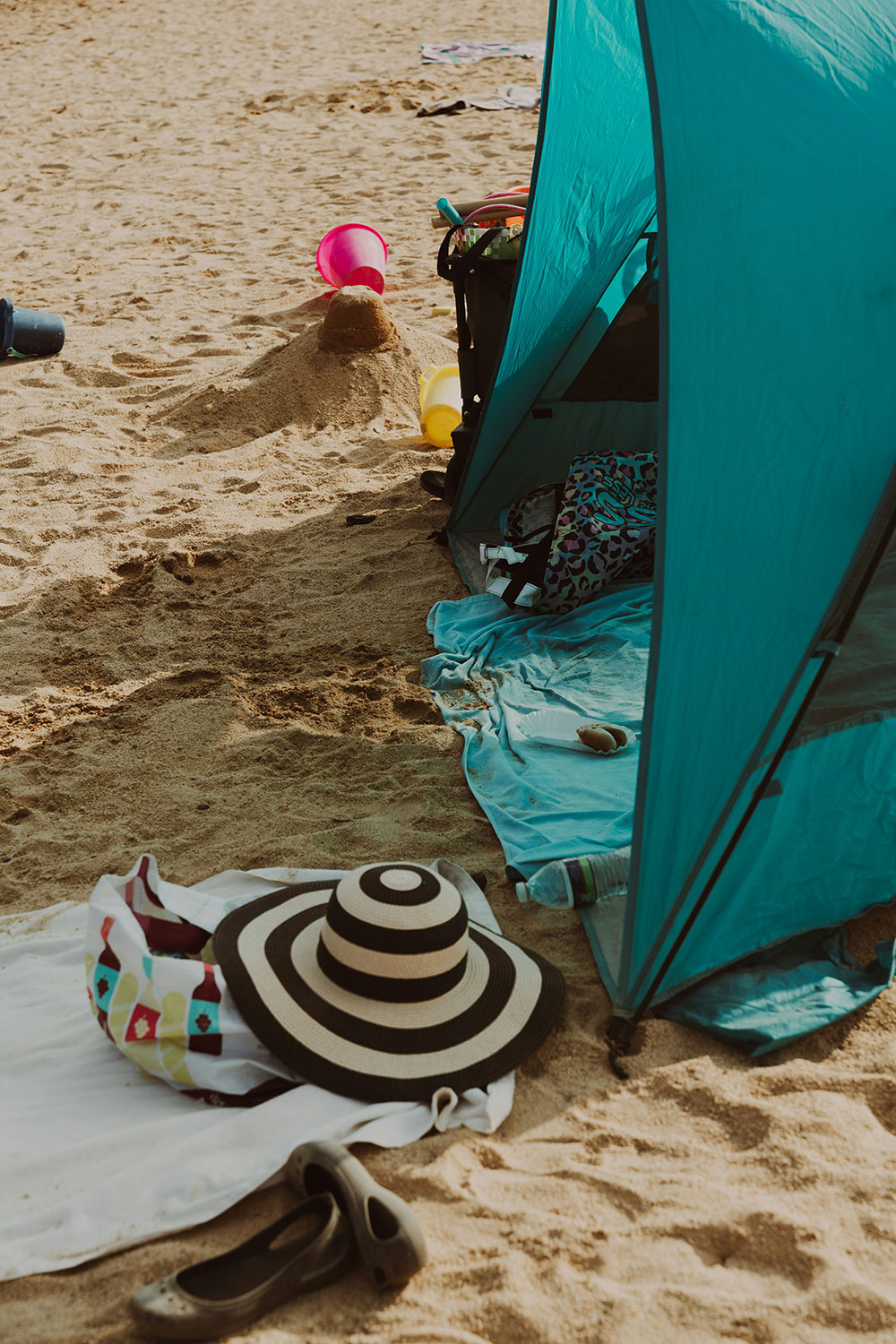
It also becomes the snack station, the nap zone, the changing room, and the place everyone reconvenes. A tent makes the whole day more organized without any extra effort.
Use different-colored towels for each family member
Sounds trivial, but it saves approximately four arguments per beach visit. Each person has their own color, folded at their spot. They can see it from the shoreline. It’s also a useful landmark for younger kids learning to navigate back to the family on their own.
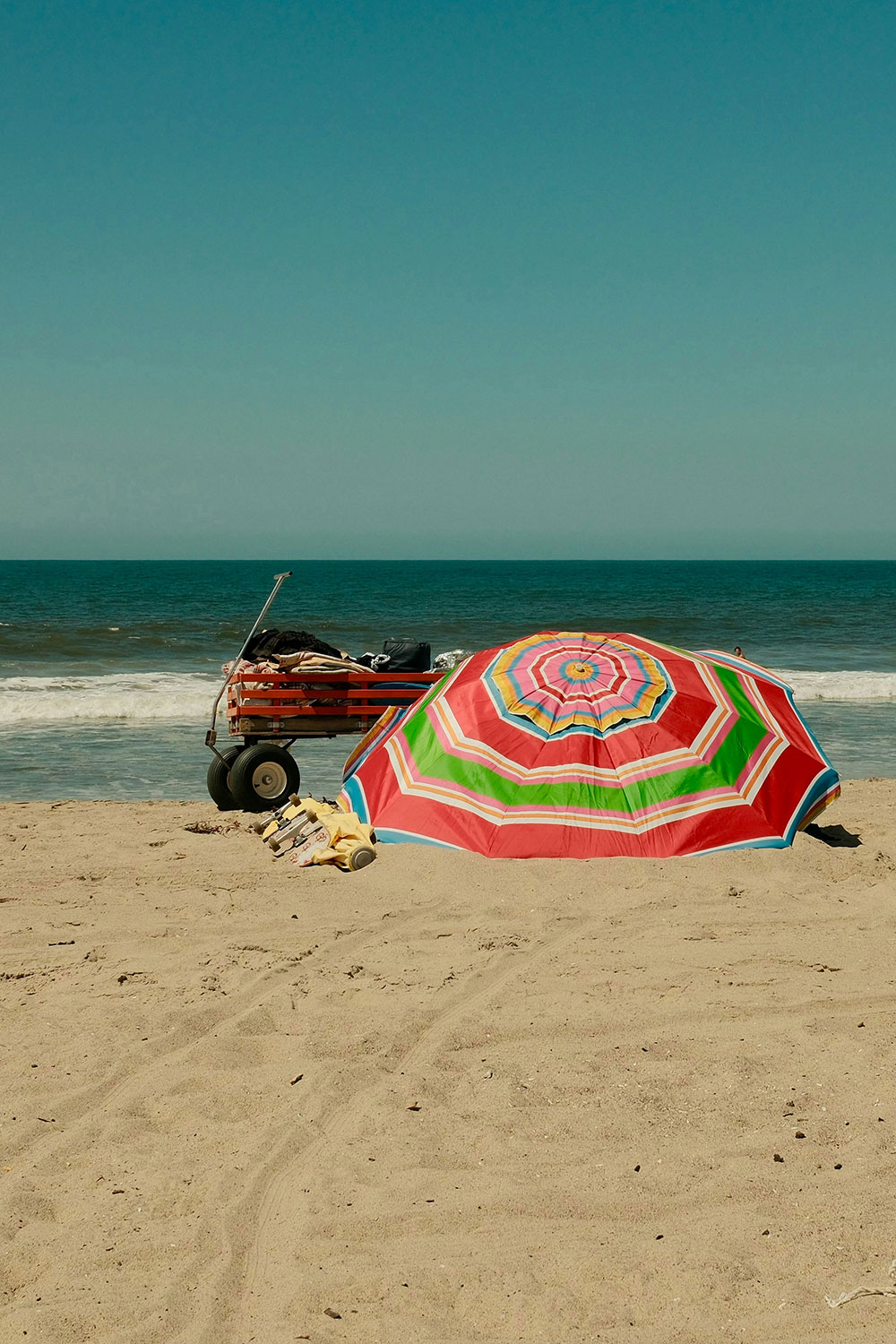
Bring a wagon, not a stroller or cart
Honestly, a beach wagon with wide wheels is one of the best investments for families who beach regularly. It carries all your gear on the way in, and on the way back, it carries exhausted, sandy children who have run out of legs.
Extra tip: line it with a few folded towels and a younger child can nap in it under a shade cloth. No stroller manages sand the way a wagon does.
Apply sunscreen at home, then use a spray for reapplication throughout the day
Getting the first coat on before you leave means you’re protected the moment you arrive. For top-ups throughout the day, a spray bottle of sunscreen makes reapplication fast and easy, especially with multiple kids who are constantly moving.
Set a timer — every 90 minutes is the practical target, every two hours is the minimum.
Use a makeup sponge to apply sunscreen to kids’ faces
This is one of those tricks that sounds strange until you try it, and then you wonder why nobody told you sooner. A cheap beauty blender or makeup sponge applies sunscreen to a child’s face smoothly, evenly, and with far less resistance than a parent’s hand pressing down on their forehead.
Even kids who refuse to apply sunscreen often accept it without a fight. It also gives more even coverage, which means less chance of a missed-spot burn.
Dress younger kids in UPF rash guards and swim shirts
A UPF-rated rash guard on a toddler means you only have to worry about sunscreen on their face, neck, and whatever isn’t covered. The rash guard handles everything else.
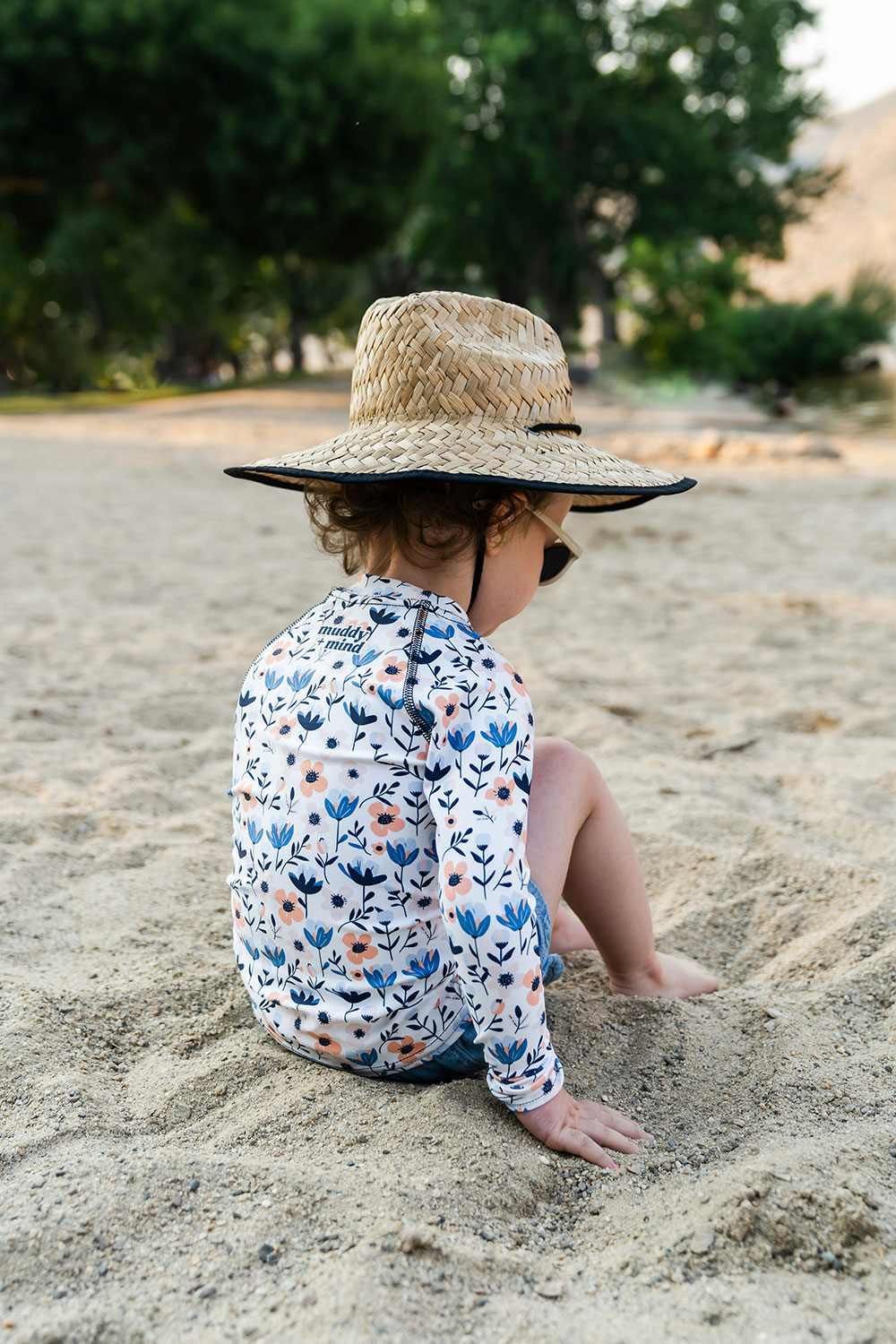
It also protects against sandburn and jellyfish stings in shallow water. Far less stressful than trying to reapply lotion to a wet, wriggling child every hour.
Freeze juice boxes and yogurt pouches overnight
A frozen juice box at 9 AM is a perfectly sippable cold drink by 11. A frozen yogurt pouch becomes a slushy treat right when a child is hottest and crankiest.
Plus, they also act as extra ice packs in the cooler while still solid. This is one of those family beach tips that seems small but genuinely shifts the afternoon energy level.
Pack sandwiches in individual zip-lock bags
Packing each person’s lunch separately means no communal unwrapping in the wind, no sandwiches touching each other, and no disputes. Label them with a marker if needed. Wraps and pita pockets hold together better than regular sandwiches in beach conditions — less crumble, less mess.
Bring a collapsible bucket: Filled with water, you have a hand-washing station
Sand in food is optional, not inevitable with this trick. Set up a hand washing station near the food bag. Before anyone reaches for a snack, hands go in the water bucket. It takes five seconds and completely eliminates the gritty sandwich experience.
This single habit makes eating at the beach a genuinely pleasant experience instead of a crunchy one.
Freeze half-filled water bottles and top them up before leaving
Fill bottles halfway, freeze them on their sides overnight, and top up with cold water in the morning. You get ice-cold drinks for most of the day, and the frozen core keeps the cooler contents cold, too. No bags of ice, no mess, no extra cost.
Bring a beach scavenger hunt list
Keeping kids entertained beyond “just play in the water” is a real challenge, but with a few tricks, you can handle the situation and turn any shoreline into an adventure. Print or write a simple list before you go: find a spotted shell, a piece of sea glass, something smooth, something rough, a feather, a crab hole, and five different types of shells.
Older kids can do it independently. Younger ones do it with you. It transforms wandering into exploring and extends engagement well beyond the point where waves lose their novelty.
Pack a kite
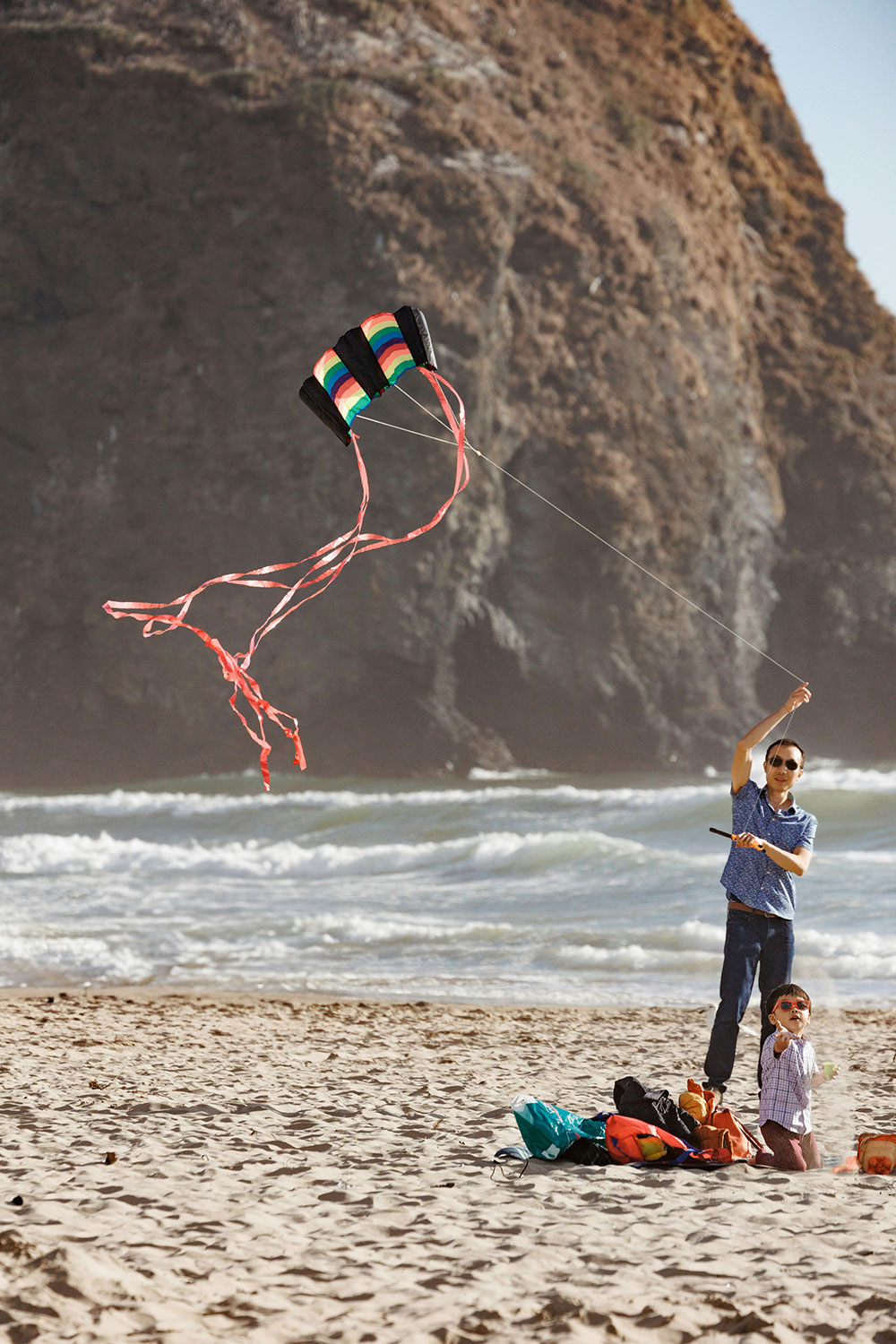
A basic kite is one of the most underrated beach items for families. Wind is almost always available at the shore, setup takes seconds, and children between about five and fourteen will spend a surprising amount of time with it. It also gives parents something active to do with older kids while younger ones are napping or playing nearby.
Bring a snorkeling set for kids
You don’t need coral reef conditions. Even knee-deep water has shells, small fish, and sea plants that are completely invisible from above and genuinely fascinating from below.
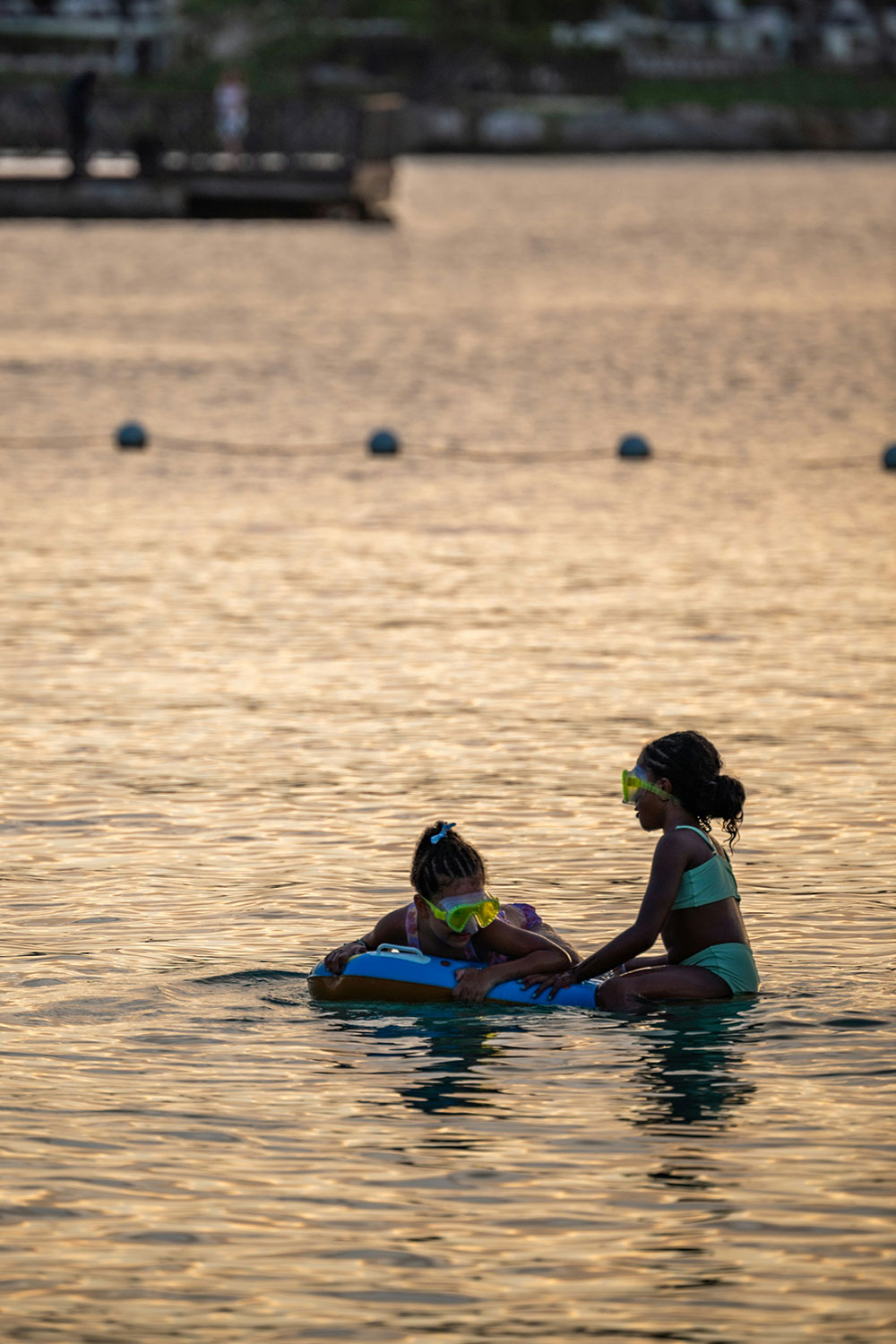
A child who puts on a mask in shallow water and sees a crab walking along the bottom has an experience they talk about for weeks. Basic masks cost very little and hold attention for a very long time.
Create a “boredom box” in a dry bag
A small selection of non-electronic activities for beach downtime is a must-have for kids. It can be a small watercolor set and paper, a cheap card game, a few foam balls, some modeling clay in a sealed container.
Not everything for every moment — just a small curated collection for the quiet spells when the ocean has lost its appeal and screens aren’t an option. Having something to pull out at exactly the right moment is the difference between a smooth afternoon and a restless “when are we going home” one.
Use the beach as a classroom: Teach kids beach safety
If you’ve run out of activity ideas by mid-morning or if you’re simply looking for something more meaningful to do between sandcastles and snack time, turning the beach into a classroom is one of the smartest moves you can make.
Not in a formal, sit-down way. Just walking around, asking questions, and paying attention to things that are already there.
Start with the warning flags; most kids have no idea what they mean, and neither do many adults. Walk to the lifeguard station and ask if you can watch for a while. Most lifeguards are more than willing to explain what they do, especially with curious kids.
Look for the warning signs posted around the beach and read them together. Stop at each one and explain it in plain language.
You can make it a game for younger kids: spot the sign, read it, earn a point. Younger children don’t need a lecture. Give them a simple mission: find three signs on the beach, bring a parent to each one, and get a point for every one they can “read” with help. It turns safety awareness into fun and covers the same ground without anyone feeling like they’re in school.
Plan for a midday break
The peak sun hours between noon and 3 PM are the hardest on young children. Heat, overstimulation, hunger, and disrupted routine combine in ways that reliably produce meltdowns. Build in a break: lunch in the tent’s shade, quiet time, a short nap for younger ones.
Families who do this consistently report dramatically better afternoons than those who push through. The beach will still be there at 3:30.
Keep routine anchors: Snack time and nap time at roughly the same time as at home
A new environment, heat, excitement, and a disrupted schedule are a reliable recipe for a child who suddenly cannot cope. The beach is disorienting enough.
Keeping meal and rest times close to your usual schedule gives children one thing that feels predictable, and predictability is calming.
If a meltdown starts, move into shade immediately
Before interpreting a sudden cry-fest as behavioral, check whether the child is overheated, thirsty, or overstimulated. Move to shade, offer cold water, some easy snacks and sit quietly for a few minutes.
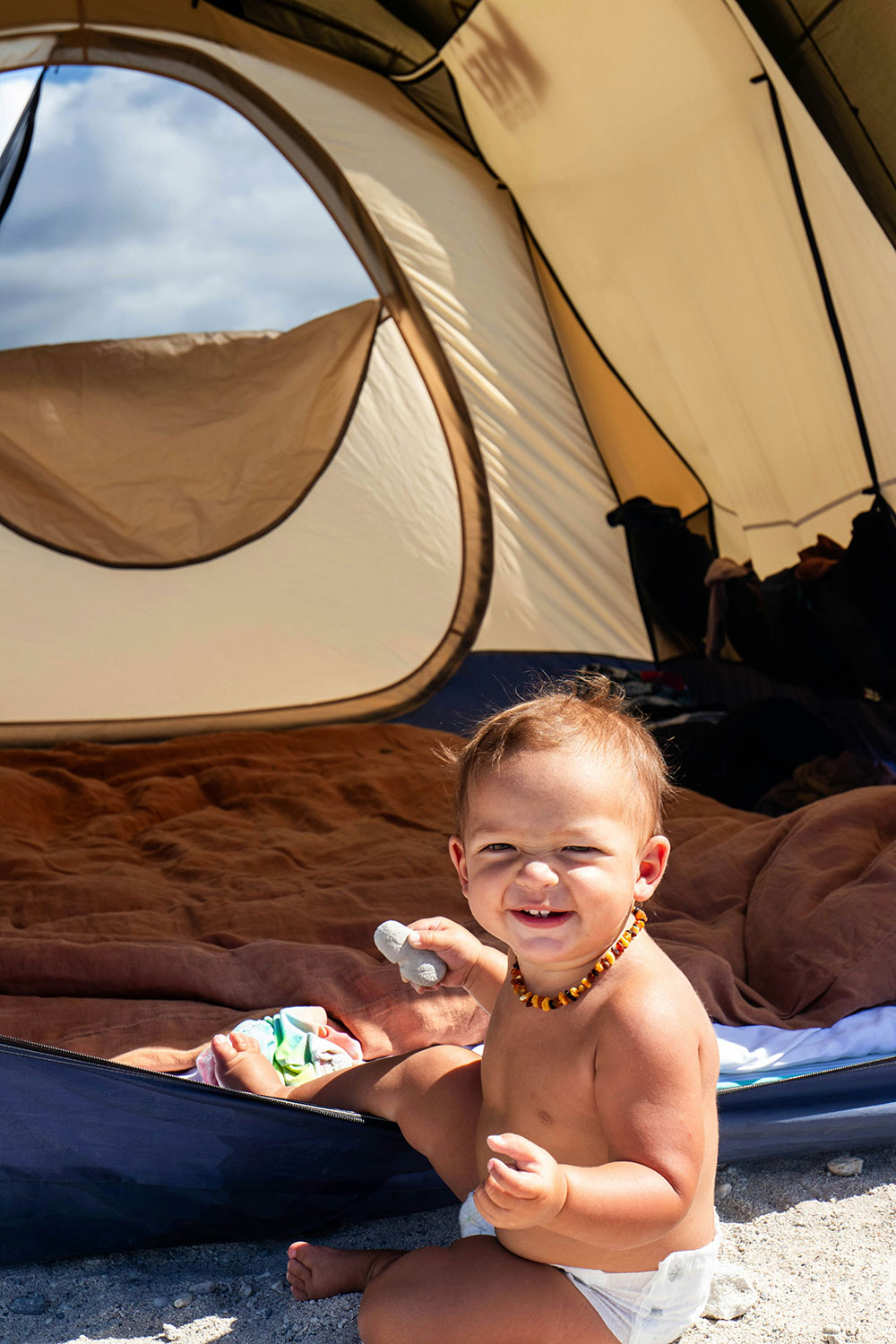
Many beach meltdowns resolve almost entirely once the heat is removed. It’s always the right first step.
Designate one adult as the water watcher at all times
I learned that everyone’s watching” means nobody is watching. When you’re in a group, shared responsibility for water supervision is dangerous.
Assign one adult at a time to be the designated watcher — phone down, eyes on the children in and near the water. Rotate the role every 20–30 minutes. This is the single most important safety habit for families at the beach with young children.
Dress kids in brightly colored or patterned swimsuits
Navy blue and white are charming. Neon orange, hot pink, bright yellow and unique patterns are visible. In a crowded beach or choppy water, the ability to spot your child instantly is worth more than any aesthetic preference.
Bright colors are also easier to pick out from a distance when a child wanders toward the shoreline.
Bring twice what you think you need in spare clothes
Not because children are careless, but because they are. Two wet swimsuits, an unexpected ice cream incident, a tumble in the shallows. Pack for the realistic version of your kids, not the theoretical tidy ones.
Establish water rules before you get to the beach, not at the water’s edge
“No going past your knees without an adult” is easier to agree to at home over breakfast than when you’re already standing at the shore and a wave looks exciting.
Talk through the rules in the car. Involve older kids in the logic and mention the main hazards like waves are unpredictable, currents are invisible. Children who understand the why follow rules more consistently than those who just hear the no.
A portable travel potty in the wagon is a lifesaver with toddlers
Beaches with distant or non-existent restrooms are far less stressful with one tucked away. The moment you need it, you really need it.
Give a 20-minute warning, then a 10-minute warning
Leaving the beach often turns into drama, so treat it as a countdown, not a surprise. “We’re going now” said to a child mid-sandcastle is an ambush. It triggers resistance because there has been no psychological preparation.
Two warnings with specific countdowns give children time to finish what they’re doing, say goodbye to the sea in their own way, and arrive at the car park mentally ready to leave rather than in full protest mode.
Make pack-up a game for young kids
The cleanup phase is when parent patience is lowest and child cooperation is most negotiable. Turning it into a competition costs nothing and gets results. “First one to find all the yellow toys gets to pick the music in the car” is not a bribe. It’s excellent project management.
Keep a separate dirty bag
Sandy towels, wet swimsuits, sandy shoes: all go straight into the dirty bag. Everything else goes in the boot normally. The car stays clean. Wet things get dealt with at home rather than marinating in the backseat. One of those family beach hacks that becomes immediately non-negotiable once you start doing it.
Rinse kids with fresh water before getting in the car
A large water bottle or small camp shower works perfectly. Salt and sand on skin in a hot car is uncomfortable for everyone, and it saves your seats from a slow-motion gritty disaster.
On the way home, summarize the day together
Fresh memories make the best feedback, and it sets up every future beach day to be better. This is the single habit that made the biggest difference to our family beach days. While everyone is still sandy, still sun-warm, and the day is vivid in everyone’s mind, start talking.
What did they love? What didn’t work? Was the spot too crowded? Did someone wish there had been more snacks? Did the kite stay in the bag all day and nobody noticed until now?
When memories are fresh, even young children can tell you exactly what they felt and what they’d want more or less of next time. You’re essentially getting a free debrief from your harshest and most honest critics, at exactly the right moment to actually remember what they said.
Write it down or in your phone if anything important comes up, like “bring the snorkel masks next time,” “arrive thirty minutes earlier,” “the wagon wheel broke, replace it.” Small notes taken in the car have a way of becoming the details that quietly make the next beach day noticeably smoother than the last.
And if the day was a good one, and most days, despite everything, are, use that moment to set a date for the next trip. Not vaguely, not “soon.” An actual date, even a tentative one.
Kids who have something specific to look forward to sleep better that night, complain less on the way home, and carry a little more patience for the sandy car and the tired legs. It transforms the end of one beach day into the beginning of the next one, and that is not a small thing.

Family Beach Tips and Tricks That Will Make Your Day
There is no such thing as a perfectly smooth beach day with children. There will always be something: the lost flip-flop, the unexpected tantrum, the snack that rolled into the sand. But the families who make the best memories aren’t the ones who avoid all the chaos. They’re the ones who were prepared enough not to let the chaos win. Go prepared, stay flexible, and remember that the kids won’t remember the meltdown. They’ll remember the waves and fun.