
Maldives In The Rainy Season: What It’s Really Like (From Someone Who’s Been Twice)
When you picture the Maldives, I’m guessing you imagine clear blue skies, white sand beaches, and that perfect overwater villa where your only worry is when to flip over for an even tan. But what if I told you I’ve been to the Maldives in the rainy season, not just once, but twice – and not only survived, but actually kind of loved it? Even when it was raining.
The first time was a total accident (aka a budget-friendly deal), and the second was on purpose (hello, manta rays). So yes, the Maldives in the rainy season is different, but don’t panic just yet. Let me walk you through what it’s really like to visit during the monsoon months – when it is, what the weather’s actually like, and whether taking a vacation during this time is a good idea or not.
When Is The Rainy Season In The Maldives?
The rainy season – also known as the southwest monsoon or Hulhangu (as it is called in Dhivehi, the language of the Maldives) – runs from May to October, peaking around June to August. If you’re planning a summer escape and stumble across some too-good-to-be-true deals… this is probably why.
Normally, even during the so-called “rainy” season, you’re unlikely to experience days of nonstop downpour (unless you are extremely unlucky). Instead, think of it like tropical mood swings – sunshine, then a dramatic shower, followed by a rainbow and the most magical sunset you can imagine. Rinse and repeat.
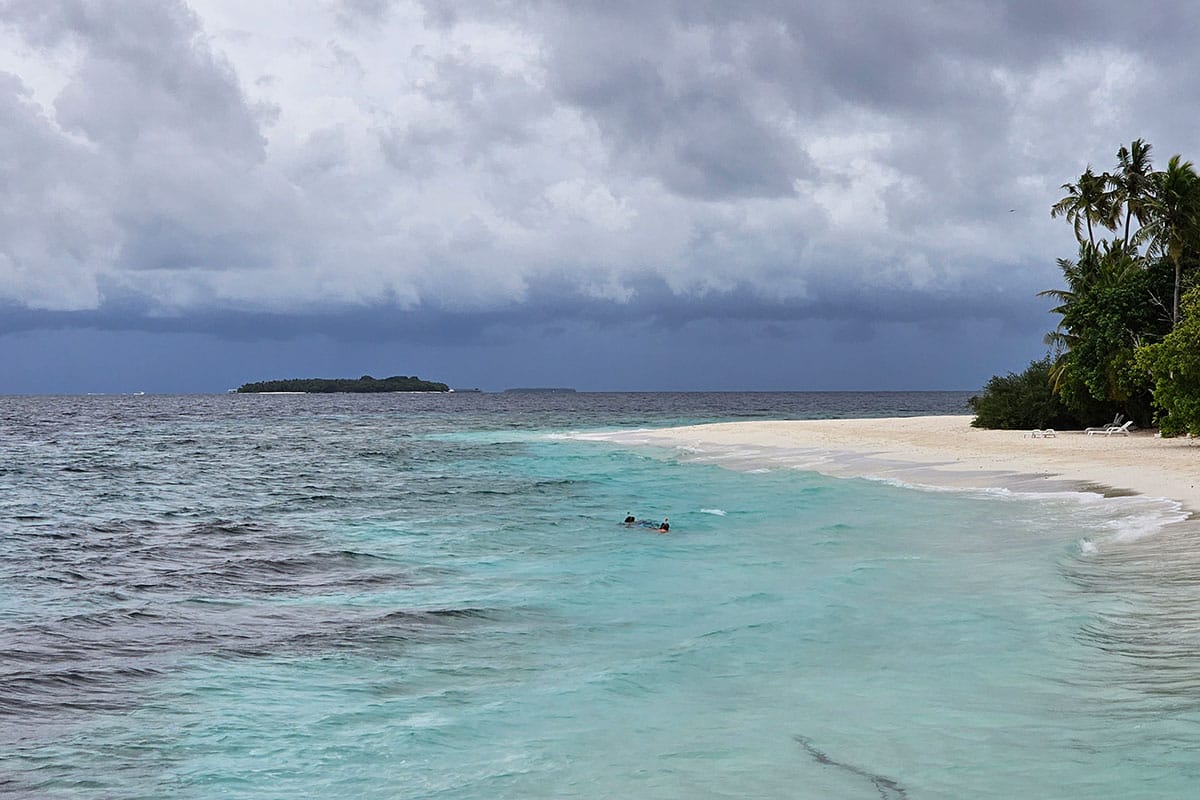
The tricky part is that the monsoon doesn’t play by a fixed rulebook. One year might bring daily downpours, while the next surprises everyone with just a few light, summer-like showers. Sometimes you get soft drizzle and moody skies; other times it’s full-on thunderstorms with lightning, strong winds and rough seas. So yes, you might get lucky with amazing weather, but there’s always a bit of a gamble involved.
Is The Rain The Same Everywhere In The Maldives?
Not quite! The Maldives stretches across the equator for about 870 kilometers, which means the weather can vary a bit from north to south. The Northern atolls (like Baa and Raa) tend to get hit earlier and a little harder. The Southern atolls (like Addu or Gaafu) are often slightly less rainy or experience the wet season a bit later.
But honestly? You’re still in the Maldives. Worst-case scenario: you will be experiencing the tropics with rain and spend more time in your resort’s spa (and in the bar). Best-case scenario: you get just passing showers, otherworldly sunsets, and a perfect vacation in the Maldives at reduced rates.

So, What’s The Weather Like?
In a word: unpredictable. (In a few more: warm, humid, and moody.)
Typical rainy season weather includes:
- Quick, heavy showers, often in the afternoon or evening
- High humidity that makes your sunscreen melt off within seconds and keeps your swimsuit and towels from fully drying (make sure to remember this fact when packing for the Maldives and bring extra of these)
- Cloudy skies, but still warm enough to swim and snorkel
- Rougher seas, which can sometimes delay speedboat or seaplane transfers (don’t forget to have travel insurance that covers expenses caused by such disruptions)
The temperature? A solid 27–31°C (80–88°F) all year round, and the water stays deliciously warm too, typically around 28–30°C (82–86°F). So rain or shine, you’re still getting that tropical heat.

Don’t Forget The Transition Months: When Maldives Throws A Weather Plot Twist
When talking about visiting the Maldives in the rainy season, it is crucial to mention that April and November are the so-called monsoon transition months, when the moist south west monsoon winds begin winding down and the north east dry monsoon gears up. The Maldives Meteorological Service actually lists these two months as the crossover periods between seasons.
These months bring moderate rainfall, about 113 mm in April and roughly 196 mm in November, and around 7–8 hours of sunshine per day. Average humidity hovers in the high 70s %, and winds begin to shift direction, setting the stage for seasonal change.
Most people think that those in-between months when the seasons are shifting can be a smart time to visit. In most destinations, shoulder seasons are often the sweet spot: fewer tourists, better prices (often 25-40% lower than in December), and still decent weather. The Maldives is no exception in theory: you’ll find good diving visibility, especially in November as the waters begin to clear, and plenty of tempting off-season deals.
But here’s the catch: unlike other places where shoulder seasons are predictable in their mildness, the Maldives tends to throw curveballs. These transition months are known to be the most unpredictable. The weather can’t seem to make up its mind. Sometimes the monsoon overstays its welcome or the dry season kicks in late… or both try to show up at once.
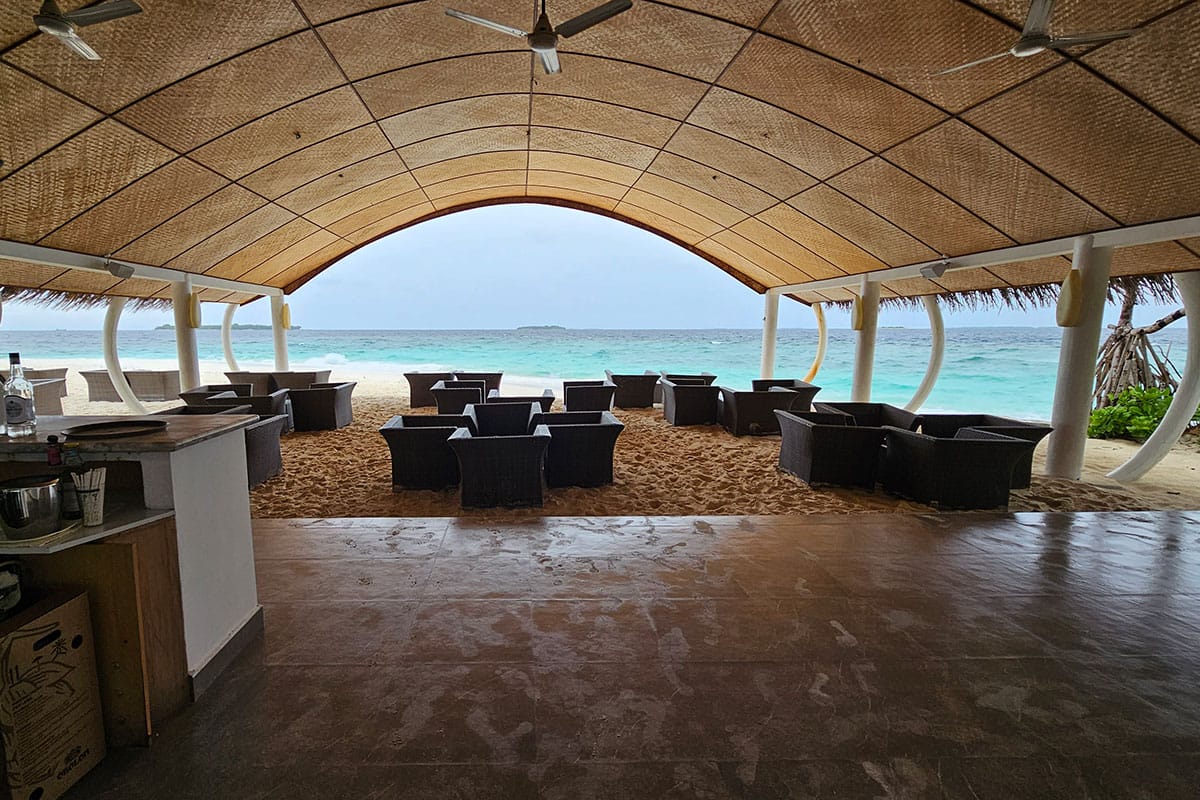
So yes, April and November can absolutely offer a little bit of everything – sunshine, savings, and some serenity – but just know you’re rolling the dice. It might be one of the best trips you’ve ever had… or one of those where you spend half the time staring at the rain and wishing you’d picked a different destination.
Why I Went During The Rainy Season Twice And What Was My Experience
First Trip: The Accidental Bargain
I didn’t plan to visit the Maldives in the rainy season. I found a dreamy deal online, booked it faster than my holiday was approved and only afterward realized I was heading there smack in the middle of monsoon season. Oops.
But surprise, surprise – the weather was actually great! I had a few dramatic rainstorms (great for cozying up with a glass of champagne in my villa), but they passed quickly, some days were sunny, others overcast.
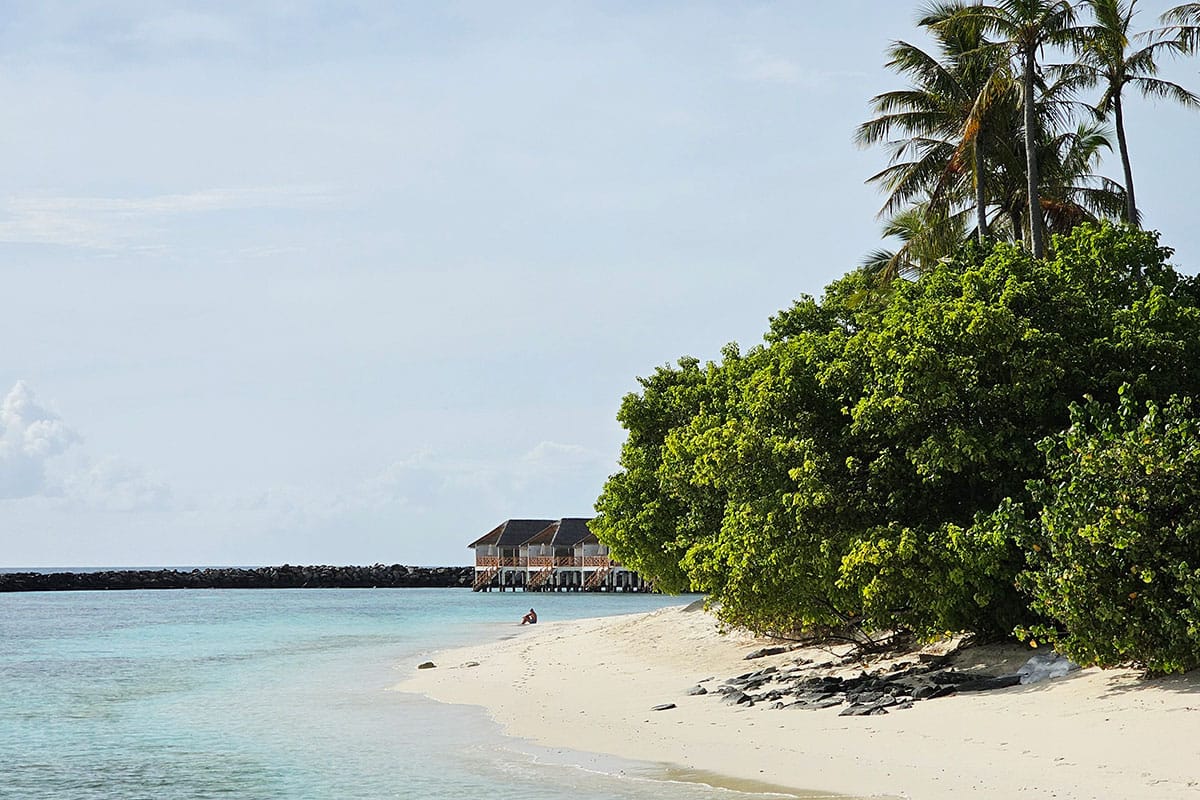
Basically, I got dry-season vibes at rainy-season prices. If you had asked me after that trip whether the Maldives is any different during monsoon season, I would’ve said no, it felt just like any other trip I’d taken in the dry season, only with fewer people and discounted rates. I even caught myself wondering why I hadn’t been traveling during this time all along. But of course, I didn’t realize at the time that I was just way too lucky with the weather. It could’ve easily gone the other way.
Second Trip: Coming To See Mantas
The second time, I knew exactly what I was getting into. I went in August, aka peak rainy season, because I wanted to snorkel with manta rays (pro tip: they can be seen year-round in the Maldives but show up in big numbers during this time at certain spots due to seasonal plankton bloom).
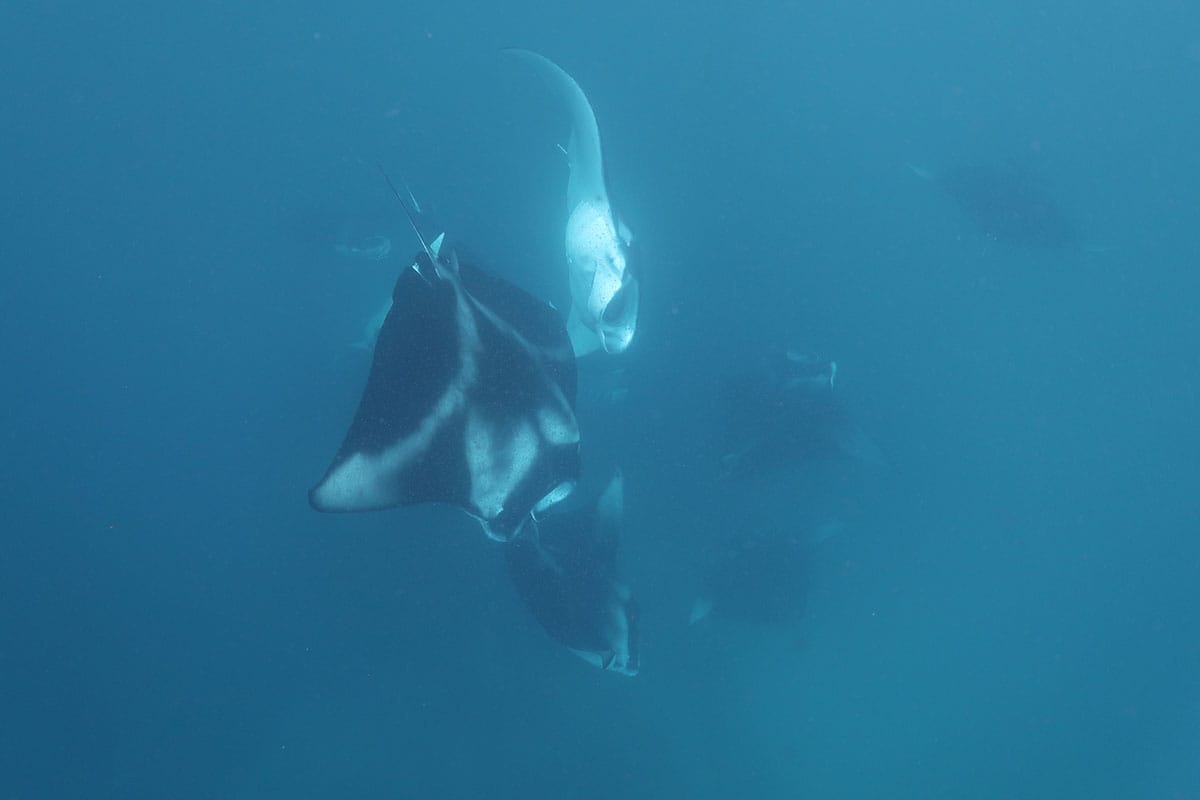
And yes, it rained. Almost every day. But we were out on wildlife tours or dives so much that it barely mattered. The manta sightings were magical, so it was not a big deal if it was cloudy or raining. There was one day when a big storm rolled in and diving had to be cancelled – boats aren’t allowed out on the sea when the weather gets too rough. But, this ended up being the perfect excuse to book myself into the spa, sip ginger tea, and listen to the rain from a cozy treatment room. Not exactly a bad day in paradise.
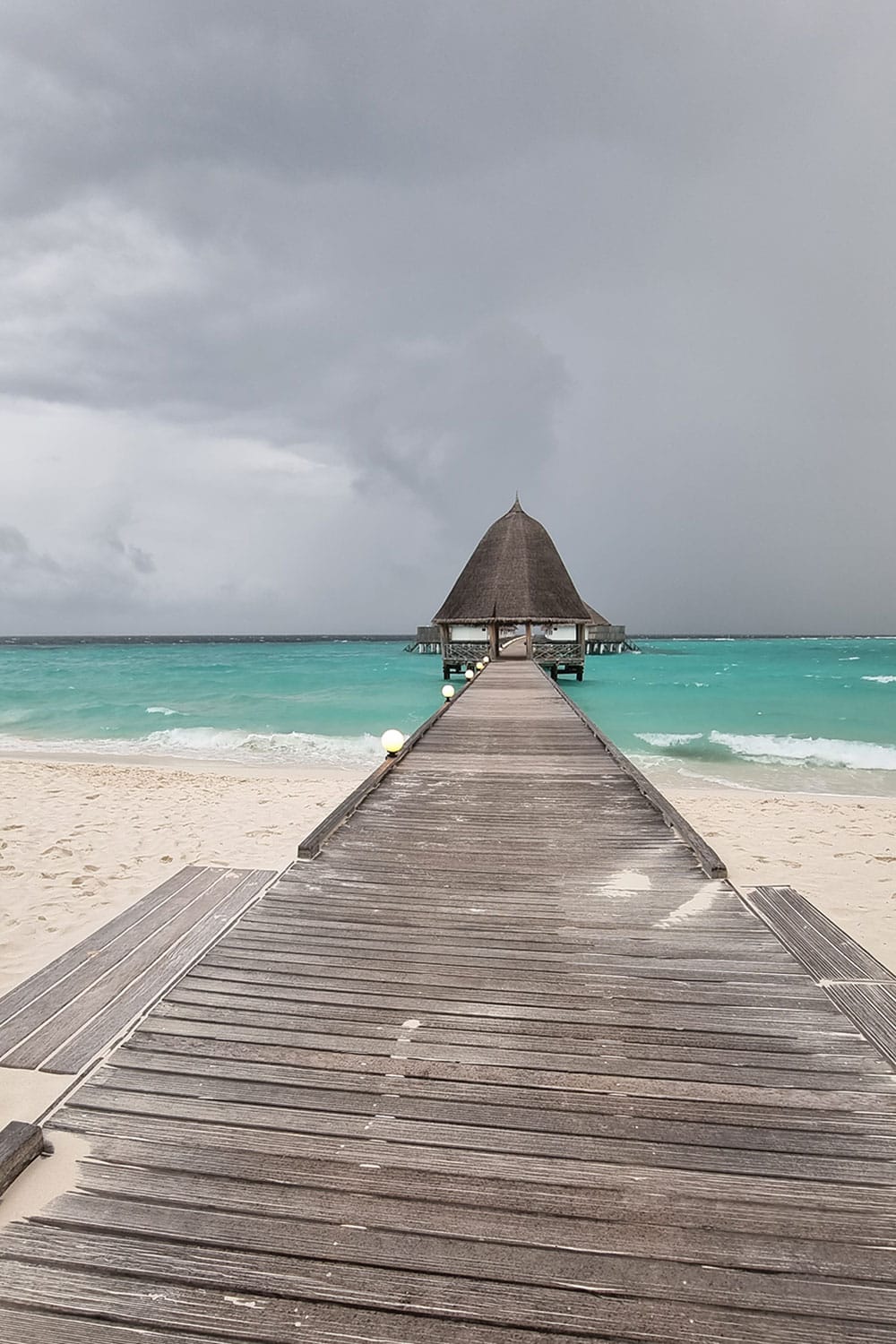
Full honesty: if it had been my honeymoon or my first trip to the Maldives, I probably would’ve been disappointed. The same goes if I were visiting with a toddler who just wants to play in the water and build sandcastles all day – I would’ve regretted coming.
But since this was a solo trip and I was out diving from morning till late afternoon most days, it actually worked out perfectly.
I was underwater chasing manta rays and whale sharks when the clouds rolled in, and by the time I was back on land, it was either clearing up or the rain didn’t really bother me – I was too hungry after diving, so the only thing I cared about was when the restaurant was opening for dinner, haha! I didn’t need non-stop sunshine – I needed adventure, and I totally got it. Rainy season or not, I had a blast.
Summing It Up: Pros And Cons Of Visiting The Maldives In The Rainy Season
Pros
- Cheaper prices – Resorts and flights are often way more affordable
- Fewer crowds – That overwater hammock? All yours
- Wildlife encounters – Manta rays and whale sharks are more active
- Lush scenery – The islands turn extra green and gorgeous
- Cozy tropical vibes – Rainy mornings = spa, books, and room service
Cons
- Rain – Some days will be wet and gray. You might not get that typical white sand – blue sky beach scene and perfect pictures
- High humidity – The kind where your clothes stick, your swimsuit doesn’t dry and your skin glows (not in a cute way)
- Choppy seas – Boat rides can get… “adventurous”, even be called off when it is too bad
- Reduced visibility underwater – due to nutrient-rich currents, not ideal conditions for diving and snorkeling
- Not ideal for tanning – If your dream trip is a non-stop sunbathing marathon, this isn’t the season for you
Final Verdict: Should You Visit During The Rainy Season?
If you’re expecting 10 days of Instagram-perfect skies and poolside lounging, save your trip for the dry season (November to April).
But if you enjoy dramatic tropical weather, don’t mind getting a little wet, want to score luxury for less and experience fantastic wildlife encounters… then yes, the rainy season can totally work. Just pack smart, add a light rain jacket, leave the flat iron at home, and embrace the Maldives’ moody, magical side!
My ultimate tip? Go last-minute. Seriously! Keep an eye on the forecast, and when you spot a nice weather window (aka no storms or strong winds coming your way), pounce on one of the many last-minute deals floating around during monsoon season.

Also, don’t just trust your average weather app. Most of them show broad regional forecasts, so if it says “storm,” that could mean heavy rain in the far north while your chosen island is basking in sunshine. Instead, use more detailed tools like Windy.com, which shows wind, rain, and cloud patterns in real time. Pair that with a few webcams from local resorts or harbors to double-check actual conditions, and you’ll get a way more accurate picture of what’s going on. A little bit of weather stalking can go a long way in scoring yourself a tropical getaway that’s both budget-friendly and mostly dry!